
The power of small wins
Dr Andrew Robson unpacks what animal rehabilitation can teach about determination, highlighting the power of small wins.
You can listen to this article below, or by using your favourite podcast player at pod.link/oncologybuddies
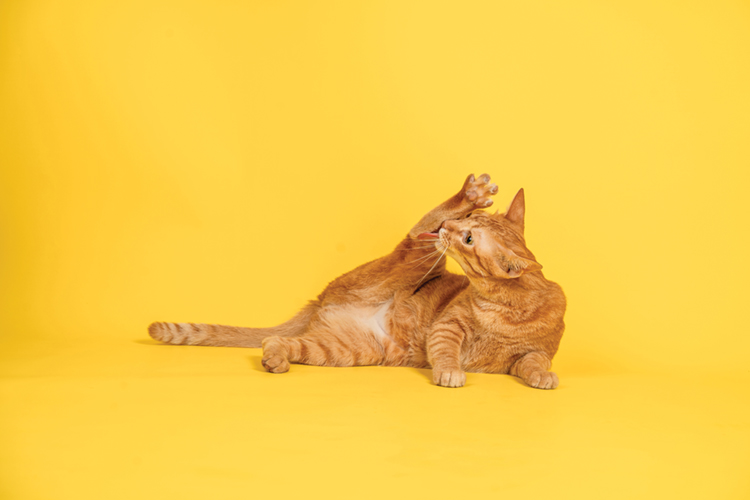
In medicine, recovery rarely happens all at once. It happens in small, almost unremarkable moments. For example, a dog placing weight on a leg for the first time after surgery, a cat managing to groom itself again after illness, a hesitant step that becomes two, then three. These are the milestones we celebrate quietly in the consult room, knowing how much effort sits behind them.
The recovery progress can feel frustratingly slow and is often not linear. There are good days, setbacks, and plateaus. It’s easy to become focused on the end goal: remission, strength, a return to normal. But that focus can sometimes obscure the quiet progress happening along the way. There is also a psychological dimension to this. When progress is defined only by large outcomes, it can feel distant and discouraging. When progress is measured in smaller, tangible steps, it becomes visible and immediate.
Small wins give a sense of forward movement
Rehabilitation should be built on small wins. And in many ways, these small victories tell us more about determination than any dramatic comeback ever could. Unlike people, animals don’t measure their progress by what they have lost. A dog recovering from spinal surgery doesn’t dwell on how far it used to run. It responds only to what its body can do today. If today that means standing for a few seconds longer than yesterday, that is enough. There is something profoundly instructive in this. Animals don’t question whether the progress is enough, they simply continue.
I often try guide owners through this process. I ask them to celebrate the small changes, things like improved appetite, a brighter demeanour, a slightly stronger step. These markers may seem minor, but they are often the most reliable indicators that healing is underway.
The same principle should apply in human health. Small wins matter because they are achievable. They create momentum and offer proof that the body is responding, adapting, and rebuilding. And perhaps most importantly, small wins provide something that can feel in short supply during illness, a sense of forward movement.
Animals, in their simplicity, demonstrate this beautifully. They don’t become overwhelmed by the scale of recovery. They engage with the present moment, responding to encouragement, routine, and care. Their determination isn’t loud or dramatic. It’s steady, consistent, and quietly resilient.
Choosing to see the small wins
Of course, this isn’t to suggest that human experiences of illness can be reduced to the same simplicity. People carry fear, uncertainty, and the weight of expectations in a way that animals don’t. But perhaps that is exactly why there is something to learn here. We, humans, can choose, even in difficult circumstances, to notice the small wins.
For my mom, who had breast cancer, this was being able to get out of bed and make herself a cup of coffee, her fist time enjoying her dinner and finishing the meal, and a day with less pain than yesterday.
Towards the end of the journey when exhaustion and burnout is at its highest, this can even be the appointment that went better than expected. These moments may not feel significant on their own, but they are the building blocks of recovery.
In my clinic, we often see the moment an owner realises this and their focus shifts. Instead of waiting for a dramatic improvement, they begin to recognise progress as it happens. The journey feels less overwhelming, more manageable. And in many cases, that shift makes all the difference. Determination isn’t always about pushing harder or faster, despite what society wants you to think. It’s not about the 4am cold plunges or the hustle culture. It’s simply about continuing, one foot in front of the other, step by step, day by day and allowing those small steps to accumulate into something meaningful.
MEET THE EXPERT
Dr Andrew Robson is a veterinarian with a Master of Science degree from Wits University. Based in Johannesburg, Andrew provides the highest standard of care to small animal patients and their families. With a strong interest in companion animal medicine, animal physiology, and client education, he is passionate about strengthening the human–animal bond and supporting pet parents through evidence-based, compassionate veterinary care.

Header image by Magnific