
My mental health is doing its best…please clap
Bonni Suckling reflects on mental health after grief.
You can listen to this article below, or by using your favourite podcast player at pod.link/oncologybuddies
It was only days after my son died from brain cancer when the sentences started arriving. “He’s in a better place.” “He wouldn’t want you to be sad.” “He has gained his angel wings.” And my personal favourite: “God only picks the nicest flowers for His garden.”
Please don’t. Just don’t.
If you have ever grieved someone you love, you probably have your own collection. Words offered with the best intentions that somehow landed in exactly the wrong place.
My child had just died. I didn’t want him to have wings. He was a boy, not an angel. Someone edited a photo of him, added wings and a halo, and posted it all over social media. I was horrified. Nooooo! My beautiful curly-haired boy looked like a little fly, with snow white teeth and a UFO parked above his head. Why? Just why?
I didn’t want him to be a nice flower in God’s garden either. My completely inappropriate internal response was, Well, thank God you have weeds, so you get to keep yours. Grief doesn’t always bring out our most socially acceptable thoughts.
And I definitely didn’t want to hear that he was in a better place. I believe in Heaven. I believe my son is with God. But at that moment, with all due respect to Heaven, I wanted him in my place. Preferably making a mess, irritating me, and very much alive.
Words that cut deeper
I have heard versions of this on repeat, “If my child died, I could never continue living. I would die too.” That one lands differently. Does the fact that I survived my son’s death mean I loved him less? Because now, apparently, I have to feel guilty for breathing too. Most people mean well. Watching someone suffer is uncomfortable, so we reach into our pockets and pull out any old words.
Then time passes
The Woolies lasagne stops arriving. The phone stops pinging. People go back to work, school runs, and deciding what’s for dinner. And there you are. Still grieving. There are potholes and load shedding to discuss now. Life has returned to ordinary things, and somehow the person still taking up every inch of your heart is expected to take up less space in the conversation.
Maybe you know that feeling. That quiet pressure to start looking a little more…normal. Cheer up. Be grateful. Think positively. Move forward. Move on. You’re taking too long. Fifteen years later, I still grieve my son. Like, a lot. My grief never came with an expiry date. Dammit.
Then comes the silver lining
“But look at all the good that came from his death.” For me, that is Rainbows and Smiles, the childhood cancer foundation created in my son’s memory, my studies and my work in paediatric palliative care.
I understand what people mean. Something meaningful grew from something devastating. But the price will always be too high.
I would hand it all back to have my son. Those things came after Jed died. They didn’t happen because he needed to die. There is a difference.
Maybe your loss changed you too. Perhaps you became stronger, kinder, or braver. You’re allowed to be proud of who you became without being grateful for what broke you. I found meaning in what I chose to do with the life I had left.
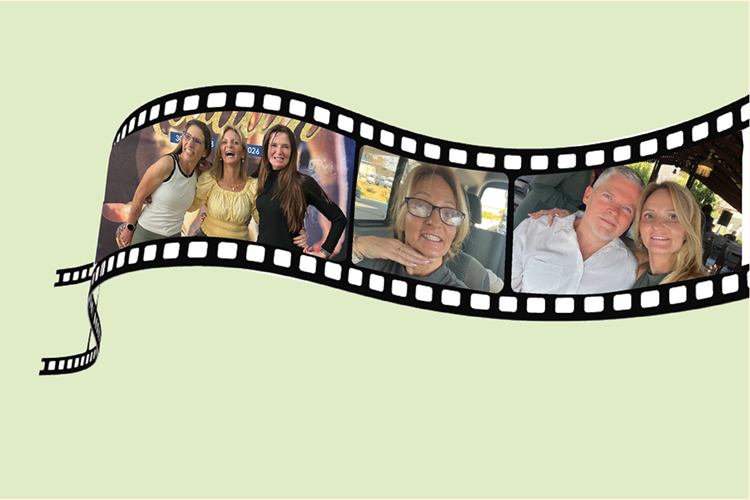
And here is where grief gets complicated. After years of everyone wanting you to be okay, slowly, quietly, you realise that sometimes you are. You laugh. Properly laugh. The kind where your stomach hurts and you almost pee a little. You go on holiday and have all the fun. You fall in love with a gorgeous man who gives you that ridiculous fuzzy feeling in your tummy, makes you laugh, grounds you and, annoyingly, looks particularly good while doing it.
Wait. That happened to me. I digress. This is my grief article, not a Mills & Boon. Give me another 750 words and we can discuss him properly.
You feel happy
Then one morning you wake up and realise something almost frightening. You feel happy. Not I’m fine, thanks happy. Actually happy.
I have learnt that I can love my life and still desperately wish Jed hadn’t died. Those two truths can sit beside each other. And yours can too. Your happiness isn’t betrayal. Your laughter isn’t forgetting. You don’t have to stay broken to prove that your person mattered.
Maybe mental health after loss isn’t about getting back to who you were before. Maybe it’s learning that you’re allowed to keep living. My mental health is doing its best.
So, when happiness finds you again, don’t push it away. Let it in. Laugh loudly. Love deeply. Live fully.
You aren’t leaving your person behind. You’re carrying their love forward.
MEET THE EXPERT

Bonni Suckling is the founder of Rainbows and Smiles Foundation. In 2022, she completed her Paediatric Post Grad Diploma, a testament to her dedication to improving paediatric healthcare. She has played a pivotal role in establishing paediatric palliative care support groups, offering solace and guidance to families. She is also a gym instructor and endurance athlete.
Header images supplied