
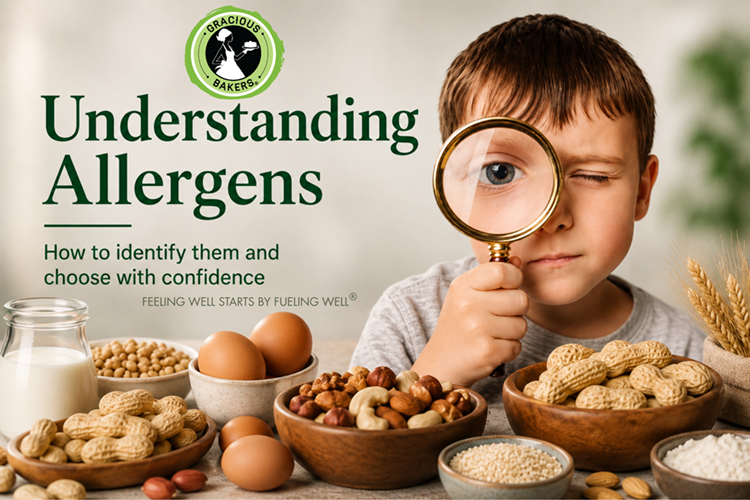
Understanding allergens and how to identify them
Elizabeth Rautenbach, founder of Gracious Bakers®, unpacks food allergens and how to identify them.
Food is meant to nourish, comfort, and bring people together. Yet for many people living with food allergies, intolerances, coeliac disease, or food sensitivities, food can often bring fear, anxiety, and doubt. A simple snack, school lunchbox, restaurant meal, or slice of cake can become a risk when ingredients are unclear or allergens are hidden.
Understanding allergens and how to identify them is an important part of informed food choices. It helps families make better choices, supports people with medical food needs, and creates more inclusive spaces at home, school, work, and social events.
Allergen awareness isn’t about fear. It’s about knowledge and education. When you understand labels, ingredients, cross-contact, and the body’s possible reactions, you are better able to protect yourself and those you care for most.
What is a food allergen?
A food allergen is a substance in food that can cause an allergic reaction in sensitive people. In many cases, allergens are proteins that the immune system sees as harmful. The body then reacts to defend itself.
For some people, the reaction may be mild, such as itching, a rash, stomach pain, nausea, bloating, or discomfort. For others, a food allergy can be serious and may cause swelling, trouble breathing, or anaphylaxis which is a medical emergency.
Why allergen awareness matters for health
If you have an allergy or sensitivity, an ingredient is not just a small amount. Even traces can matter, depending on your body and the condition. Avoiding the right allergen can help reduce the risk of reactions and support better comfort, energy, digestion, and well-being.
In children, allergen awareness is especially important because children often can’t identify hidden ingredients on their own. They rely on adults to protect, guide, and help them feel included especially at school, birthday parties, sports days, and family events, where hidden allergens can easily be missed.
For adults, food reactions can affect comfort, focus, sleep, digestion, and quality of life. If you are recovering from illness or managing health conditions, allergen-free food choices can enhance quicker recovery periods while also bringing peace of mind.
Common allergens to look out for
Some common food allergens include gluten-containing grains, cow’s milk, eggs, soya, peanuts, tree nuts, fish, shellfish, sesame, mustard, celery, lupin, and sulphites above certain levels.
Gluten-containing grains include wheat, barley, rye, spelt, and products made from these grains. Oats can also be a concern if they are not certified gluten-free, because they may come into contact with gluten during growing, milling, packing, or transport.
Allergens don’t always appear in obvious ways. They can form part of flavourings, thickeners, coatings, sauces, spice mixes, or marinades.
How to identify allergens on labels
The first place to look is the allergen statement. This is usually close to the ingredient list and may use words such as contains or may contain.
A contains statement tells you which major allergens are part of the recipe. For example, a label may say: contains milk, egg and soya.
A may contain statement means the allergen may not be part of the recipe, but there could be a risk of cross-contact. For example, a product may say: may contain traces of nuts or Produced in a facility that handles wheat.
For someone with a severe allergy, may contain warnings must be taken seriously. If you aren’t sure whether a product is safe, contact the maker or choose a clearer product.
The accepted threshold for products labelled gluten-free is below 20 parts per million (ppm) of gluten. This is why people with coeliac disease or severe gluten sensitivity should always ensure that the products they consume are made in a dedicated gluten-free facility, to reduce the risk of cross-contamination.
After checking the allergen statement, read the full ingredient list. Don’t rely only on the front of the packet. Words such as natural, plant-based, healthy, or vegan don’t always mean allergen-free.
A vegan product may be free from dairy and egg, but it may still contain gluten, soya, nuts, sesame, or other allergens. A gluten-free product may still contain dairy, egg, soya, or nuts. Every label must be checked according to your specific needs.
Allergen, intolerance, or preference: what is the difference?
An important part of understanding food needs is knowing the difference between a food allergy, food intolerance, coeliac disease, and food preference. These terms are often used together, but they don’t mean the same thing.
A food allergy involves the immune system. The body sees a specific food protein as harmful and reacts against it. Allergic reactions happen quickly and may range from mild symptoms, such as itching, hives, swelling, stomach pain, or nausea, to severe symptoms, such as throat tightness, wheezing, trouble breathing, or anaphylaxis. A true food allergy must always be taken seriously, even if you’ve only reacted mildly before.
A food intolerance is different. It doesn’t always involve the immune system in the same way. Instead, the body may struggle to digest or process a certain food. An example is lactose intolerance, where the body has difficulty digesting lactose (sugar found in milk). Symptoms may include bloating, cramps, gas, nausea, diarrhoea, headaches, or tiredness. Intolerances can be uncomfortable and affect quality of life, but they aren’t always life-threatening.
Coeliac disease is different from both an allergy and preference. It’s an autoimmune condition where gluten triggers damage to the lining of the small intestine. Gluten is found in wheat, barley, rye, spelt, and many foods made from these grains. If you’ve coeliac disease, avoiding gluten isn’t optional. Even small amounts can cause harm and affect nutrient absorption, digestion, energy, and long-term health.
A food preference is a personal choice. You may choose to avoid certain foods for lifestyle, religious, ethical, cultural, taste, digestive comfort, or wellness reasons. For example, you may choose to eat vegan, avoid dairy, reduce gluten, or follow a plant-based diet. These choices should still be respected, but they are different from a diagnosed allergy or medical condition.
Level of risk
The reason this difference matters is because the level of risk isn’t always the same. If you have a severe nut allergy, cross-contact with nuts may be dangerous. If you have coeliac disease, gluten contamination can cause medical harm. If you are lactose intolerance, dairy may cause discomfort, but the response may be different from a milk allergy. If you have a preference, the main issue may be respect, choice, and inclusion.
This is why it’s always best to ask clear questions instead of making assumptions. Rather ask: “Is this an allergy, intolerance, coeliac requirement, or personal preference?” and “How strict do we need to be about cross-contact?”
Understanding the difference helps families, schools, restaurants, and food businesses respond with the right level of care. It also helps people feel heard, respected, and safer when choosing food.
Hidden names for allergens
Allergens often appear under different names. For gluten, look for wheat, barley, rye, spelt, malt, semolina, couscous, bulgur, wheat starch, breadcrumbs, flour, pasta, and some sauces.
For dairy, look for milk, whey, casein, caseinate, lactose, cream, butter, cheese, yoghurt, milk powder, buttermilk, and milk solids.
For egg, look for albumen, egg white, egg yolk, egg powder, mayonnaise, meringue, ovalbumin, and glaze.
For soya, look for soya protein, soya flour, soya lecithin, textured vegetable protein, tofu, soya sauce, miso, and edamame.
For nuts, look for almond, cashew, walnut, hazelnut, pecan, pistachio, macadamia, Brazil nut, nut oils, nut meals, nut spreads, praline, and marzipan.
For sesame, look for sesame seeds, tahini, sesame paste, sesame oil, and seed blends.
If you don’t know what an ingredient means, don’t guess. Look it up, ask a healthcare professional, or contact the manufacturer.
Helping children understand allergens
Children with allergies or food sensitivities need support, not fear. They should be taught in a calm way which foods to avoid and why those foods may make them feel unwell.
For younger children, it helps to use clear words like This food is not safe for your body, or Always ask an adult before eating something new. Children should also learn not to swap lunchbox items, accept unknown treats, or eat food at parties unless a trusted adult has checked it first.
Parents, schools, caregivers, and family members should all understand the child’s specific needs. This includes knowing which allergen must be avoided, what symptoms to watch for, and what to do in an emergency.
It’s also important that children don’t feel excluded. When safe alternatives are available, children can still take part in birthdays, school events, bake days, and family celebrations. This gives them the words to speak up and protect their health as they grow.
Cross-contact: the hidden risk
Cross-contact happens when an allergen comes into contact with another food by mistake. This can happen at home, in factories, restaurants, bakeries, school kitchens, or shared food areas.
Examples include using the same toaster for gluten-free and wheat bread, spreading jam with a knife that touched peanut butter, baking allergen-free biscuits on a tray used for nut biscuits, or using the same oil to fry different foods.
At home, reduce the risk by keeping allergen-free products sealed and clearly labelled. Use separate utensils and chopping boards. Wash hands, clean surfaces well, and prepare allergen-free food first.
Symptoms to take seriously
Food reactions can differ from person to person. Symptoms may happen within minutes or develop later.
Severe reactions need urgent medical attention. If you have a serious allergy, you must follow your emergency plan and carry prescribed medicine if advised.
For ongoing bloating, tiredness, skin reactions, stomach discomfort, or suspected food sensitivities, it’s important not to self-diagnose without guidance.
Some people find gentle options, such as peppermint, ginger, chamomile, fennel, digestive herbal teas, or supplements (L-arginine) helpful for occasional bloating or digestive discomfort.
However, these should be used with care and shouldn’t replace medical advice, especially as some supplements may aggravate symptoms in sensitive individuals. Anyone with ongoing or severe symptoms should first seek professional guidance to understand the underlying cause.
A practical allergen-check list
Before buying, baking, or serving food, ask:
- Have I read the allergen statement?
- Have I checked the full ingredient list?
- Do I understand all ingredient names?
- Does the product have a may contain warning?
- Could cross-contact have happened?
- Do I need to contact the manufacturer or ask for more information?
If there is doubt, choose safety first.
Final thought
Understanding allergens and how to identify them is about protecting health, supporting inclusion, and giving people the confidence to enjoy food safely.
To learn more about allergen icons and how to spot allergens, visit: graciousbakers.co.za
Disclaimer: This article is for general educational purposes only and is not a substitute for medical advice, diagnosis, or treatment. Always consult a qualified healthcare provider, dietitian, or allergy specialist for individual allergy management, dietary restrictions, diagnosis, or treatment.
MEET THE EXPERT

