
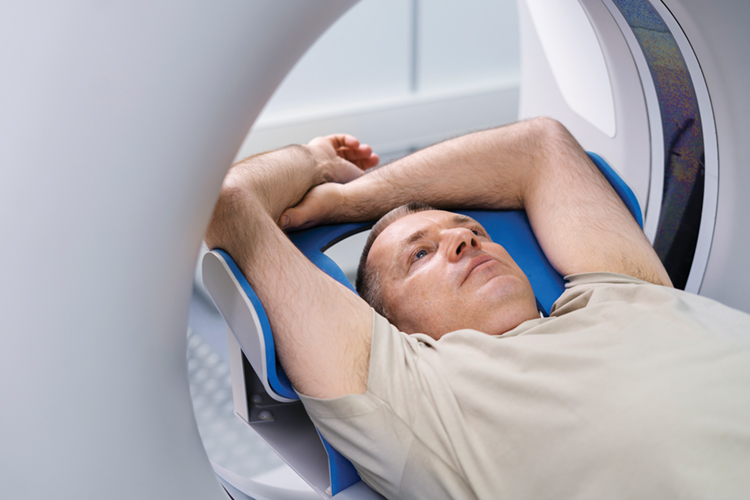
Stereotactic body radiotherapy
Prof Duvern Ramiah educates us on the quiet revolution in prostate cancer treatment: stereotactic body radiotherapy.
Imagine being told that your prostate cancer can be cured. Now imagine being told that the treatment will require a trip to hospital every weekday for almost two months.
For decades that was the reality for men receiving radiotherapy for prostate cancer. Thirty-nine treatments. Eight weeks. Countless journeys to the hospital. Time away from work, family, and the ordinary routines that make life feel normal.
But what if the same treatment could be delivered in just five visits?
That question has sparked one of the most important revolutions in modern prostate cancer care. The answer is stereotactic body radiotherapy (SBRT).
Why fewer treatments can be better
At first glance, SBRT sounds almost too good to be true. Instead of receiving radiation over many weeks, you receive a higher dose of radiation with extraordinary precision over just five treatments.
The remarkable part is that prostate cancer seems uniquely suited to this approach. Scientists have learned that prostate cancer cells are unusually sensitive to larger doses of radiation. In simple terms, prostate cancer behaves differently from many other cancers. Rather than needing dozens of small doses, it can often be controlled just as effectively with a handful of carefully targeted larger doses. This insight changed everything.
The evidence that changed practice
In medicine, promising ideas are common. What matters is whether they stand up to rigorous testing.
One of the most important studies examining SBRT was the international PACE-B trial, published in The New England Journal of Medicine in 2024. Nearly 900 men with localised prostate cancer were treated and followed for years. The results showed that SBRT was just as effective as conventional radiotherapy schedules, with more than 95% of patients remaining free of cancer recurrence at five years.
For patients, this was a landmark moment. Shorter treatment was no longer simply more convenient; it was scientifically proven to work.
Precision on a millimetre scale
The word stereotactic sounds intimidating, but it simply refers to extraordinary accuracy.
Modern radiotherapy machines use sophisticated imaging systems that locate the prostate with millimetre precision before every treatment. Radiation is then delivered from multiple angles, allowing doctors to target the cancer while minimising exposure to nearby organs, such as the bladder and rectum. The oncologist or urologist may need to insert a gold marker into the prostate prior to radiosurgery to target the cancer with exactitude.
Is SBRT right for everyone?
SBRT is most used for men whose cancer is confined to the prostate or immediate surrounding tissues and who are seeking curative treatment. Doctors also consider factors such as the aggressiveness of the cancer, prostate size, urinary symptoms, previous prostate procedures, and overall health.
The best prostate cancer treatment isn’t the same for every man. The best treatment is the one that offers the highest chance of cure while preserving the quality of life that matters most to you.
What about side effects?
Whenever cancer treatment is discussed, patients naturally focus on two questions: Will it cure me? and What will life look like afterwards?
Most men tolerate SBRT remarkably well. Temporary urinary symptoms such as increased frequency, urgency, a weaker urinary stream, or mild burning when passing urine can occur during or shortly after treatment. Mild fatigue is also common. These symptoms generally improve over time and are often managed with simple medication.
All in all, SBRT compares favourably with treatment options for localised prostate cancer, such as prostate low dose rate (LDR) brachytherapy and robotic radical prostatectomy, without the need to go to theatre.
Looking ahead
The history of medicine is often told through dramatic breakthroughs: a new drug, a groundbreaking operation, or a miraculous discovery.
SBRT is different; its revolution is quieter. It doesn’t change what we know about prostate cancer. It changes how efficiently, conveniently, and precisely we can treat it.
Five visits instead of eight weeks. The same goal. The same chance of cure. Less disruption to life.
MEET THE EXPERT

Prof Duvern Ramiah is Head of Radiation Oncology at the University of the Witwatersrand. He has a private oncology practice in Johannesburg with a special interest in prostate cancer. He serves on South Africa’s Ministerial Advisory Committee for the Prevention and Control of Cancer and the International Committee of the American Society for Radiation Oncology (ASTRO), where he is one of ASTRO’s inaugural Global Ambassadors.

Header image by Freepik