

Thrive through nutrition
Here are simple ways to manage malnutrition and maintain a healthy weight during cancer care.
Short on time? Listen to the audio version of this article here, or by using your favourite podcast player
Nutrition is essential in your cancer treatment and recovery process because cancer treatments can overwhelm your nutrient reserves resulting in malnutrition. Some 40 to 80% of cancer patients will experience malnutrition at some point during treatment. Weight loss of as little as 6% can affect how you respond to treatment and your quality of life.1,2
How to manage your nutrition and maintain a healthy weight
Whilst healthy people can easily clean their plates, as a cancer patient you may feel differently about food and could be overwhelmed if your family offers elaborate meals or full plates of food. Therefore, changing your eating pattern toward small, frequent meals, bites, and sips may be a good idea. Single servings require less energy and can also help combat fatigue.
Eating in pleasant surroundings can also help with poor appetite. You can also manage feeling full by eating food and drinking liquids separately. Drink liquids two hours before or after eating. If liquids are easier to consume, you should drink fluids that are dense in kilojoules and provide sufficient nutrition. You can also increase colour in your diet and limit processed foods.2
A balanced diet provides the six basic nutrients that are important for good health: carbohydrates, protein, fat, vitamins, minerals, and water. These nutrients are necessary for body tissue growth and repair, daily energy, fighting diseases and infections, and treatment and recovery.2
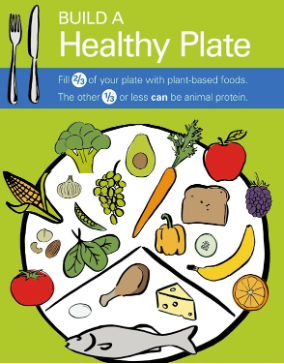
Build a healthy plate
To keep things simple, look at what foods you eat daily and then focus on how you plan to fill your plate. It’s all about eating a well-balanced diet.
- You can use a salad plate instead of a dinner plate.
- Aim for meals made up of 2/3 vegetables, fruits, whole grains, or beans. In other words, most of your plate will be filled with plant-based foods.
- The remaining ½ or less of your meal can be animal protein but choose those wisely. Limit red and processed meat.3
It’s also important to reduce empty kilojoules. Many foods and drinks are high in fat or sugar, and full of empty kilojoules. It’s okay to treat yourself occasionally but try not to make every meal a treat. Moderation and balance are best.3
For added kilojoules, you can eat more energy and nutrient-dense foods, such as peanut butter, yoghurt, dried fruit, avocados, cheese, granola, legumes, and eggs.
Soft bland foods and casseroles are usually easy to eat especially if you have mouth sores.
A liquid supplement can provide much-needed nutritional support if you can’t eat enough solid food. A liquid supplement is particularly helpful when you suffer from nutrition-related side effects, such as reduced appetite, changes in taste and smell, difficulty swallowing, nausea, and vomiting.1
How Lifegain® can help
Lifegain® is an advanced nutritional supplement that offers exceptional nutrition and can help you maintain or regain a healthy weight.
Lifegain®:
- Has a unique ratio of 52% protein, 35% healthy fats, and 12% carbohydrates.
- Is high in a triple protein blend that is easy to digest to help repair body tissues and contribute to building and maintaining muscle mass.
- Is high energy.
- Is high in 12 vitamins and eight minerals to combat tiredness and fatigue and offer immune support.
Lifegain® is an excellent way to replenish lost nutrients and can help when you suffer from malnutrition, especially when you have no appetite or struggle to eat. Lifegain® has no equal when it comes to nutritional shakes available on the South African Market.

References
- Barrera S, Demark-Wahnefried W. Nutrition During and After Cancer Therapy. [Cited 2025 Apr 19]. Oncology (Williston Park). 2009 February ; 23(2 Suppl): 15–21.
- Hager KK. Management of Weight Loss in People With Cancer. [Updated 2016; Cited 2025 Apr 19]. AdvancedPractitioner.com. Available from: doi: 10.6004/jadpro.2016.7.3.19
- Bramlet K. Building a healthy plate. [Cited 2025 Apr 19]. MD Anderson Cancer Centre. Available from: https://www.mdanderson.org/publications/focused-on-health/build-a-healthy-plate.h29Z1590624.html