
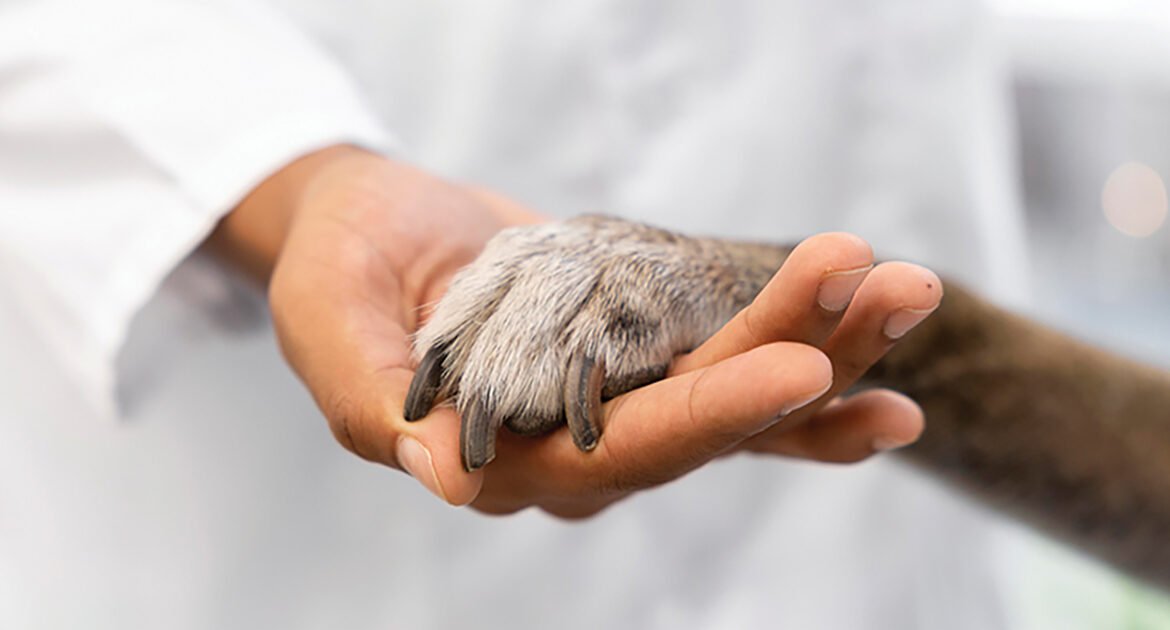
Why safe space matters
Dr Andrew Robson describes the lessons learnt from creating stress-free spaces for animals that humans should follow.
Short on time? Listen to the audio version of this article here, or by using your favourite podcast player
Across species, one truth remains consistent: healing is deeply influenced by the environment in which it occurs. In veterinary medicine, creating stress-free spaces for animals is not viewed as an optional comfort, it’s an essential part of care. Animals often show us that safety and calmness are prerequisites for recovery. These same principles apply just as powerfully to humans, particularly those living with cancer.
Stress triggers a cascade of physiological responses designed for short-term survival, not long-term healing. Elevated stress hormones can impair immune function, disrupt sleep, disturb gut health, intensify pain perception, and slow recovery. In animals, prolonged stress is associated with poorer prognoses, behavioural withdrawal, and delayed healing.
A stress-free or safe space is not defined by comfort alone. It’s an environment where the nervous system can relax. Environments where there is predictability, reduced sensory input, and a sense of control. For animals, this may mean quiet surroundings, gentle handling, familiar scents, or the ability to retreat and rest without interruption.
Importantly, safety is not only physical. Emotional and psychological safety play a critical role in how the body responds to illness. Animals exposed to constant unpredictability or fear often display heightened anxiety or, conversely, complete shutdown. This is not weakness; it’s a biological protective mechanism, one which we should aim to avoid.
Human safe spaces
For humans facing cancer, the parallels are striking. The experience of diagnosis, treatment, uncertainty, and repeated medical intervention can place the body in a prolonged state of alert.
Many people feel pressure, internal or external, to remain strong, positive, or composed at all times.
While resilience is admirable, constant vigilance comes at a cost. The body cannot remain in survival mode indefinitely without consequence.
Safe spaces allow that vigilance to soften. They create moments where the nervous system can relax, even if it’s only for a moment. This may look different for each person: a quiet room, a trusted relationship, a routine that brings predictability, time away from expectations, or simply permission to rest without explanation. These spaces do not remove illness, but they can change how illness is experienced.
No apologies for rest
One of the most powerful lessons from animal care is that rest is not something that must be earned. Animals instinctively withdraw when overwhelmed or unwell, conserving energy for healing. They do not apologise for needing quiet or softness. Humans, by contrast, often struggle to grant themselves the same grace, especially in the context of serious illness.
Yet from a physiological perspective, gentleness matters. Reduced stress supports immune function, improves sleep quality, and enhances the body’s ability to repair itself. Creating both emotional and physical safety is not a sign of surrender, but rather a form of active care.
Safe spaces are also protective. They offer refuge from constant decision-making, from explaining your experience to managing other people’s discomfort. Within these spaces, it becomes possible to feel fear, sadness, or fatigue without judgment. This emotional honesty, like physical rest, is part of healing.
For those living with cancer, creating or seeking out safe spaces is not indulgent. It’s biologically sound and emotionally valid. Safety allows the body and mind to do what they are designed to do when given the chance: rest, adapt, and heal at their own pace.
MEET THE EXPERT

Dr Andrew Robson is a veterinarian with a Master of Science Degree from Wits University. Based at Oaklands Veterinary Hospital in Johannesburg, Andrew forms part of a multi-disciplinary team of veterinary professionals dedicated to providing the highest standard of care to small animal patients and their families. With a strong interest in companion animal medicine, animal physiology, and client education, he is passionate about strengthening the human–animal bond and supporting pet parents through evidence-based, compassionate veterinary care.
Header image by Freepik