

Gamma Knife SA – Advancing precision
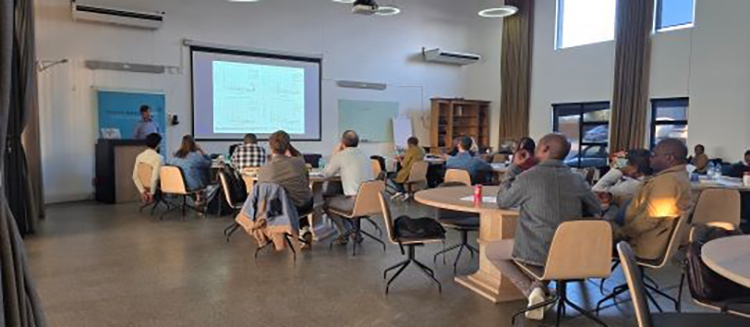
Gamma Knife South Africa hosted an exclusive two-day radiosurgery training with Mr Ian Paddick.
Gamma Knife South Africa (SA) recently hosted an exclusive two-day radiosurgery training programme in South Africa, attracting neurosurgeons, radiation oncologists, and medical physicists from across the country.
The event was led by world-renowned medical physicist, Mr Ian Paddick, recognised internationally as a leading authority in stereotactic radiosurgery (SRS) and Gamma Knife treatment planning.
The course, designed as an intensive, theory-focused programme, offered in-depth insights into radiobiology, SRS physics, precision treatment planning, and real-world patient case discussions.
With the Leksell Gamma Knife® Icon at Netcare Milpark Hospital recently fitted with new sources and enhanced by the latest Lightning planning technology, the training represented a milestone in South Africa’s pursuit of world-class radiosurgical care.
A global leader in radiosurgery: Ian Paddick
Mr Ian Paddick is internationally recognised for his contributions to modern SRS. Over more than two decades, he has collaborated with leading radiosurgery centres worldwide and has made substantial contributions to scientific understanding of dose distribution, plan quality, and treatment optimisation.
He is perhaps best known for developing the Paddick Conformity Index, now a global standard for evaluating radiosurgical plan quality. His expertise spans radiobiology, SRS physics, immobilisation systems, and the full spectrum of functional and oncological indications treated with Gamma Knife.
Mr Paddick’s teaching style, combining clarity, depth, and practical relevance, made this course an exceptional opportunity for South African clinicians.
DAY 1: Foundations of SRS, precision, and planning
The programme began with a detailed overview of Gamma Knife radiosurgery and the engineering principles that underpin its precision. Ian explored system architecture, workflow optimisation, and the role of cone beam computed tomography (CBCT) imaging in improving accuracy during patient setup and verification.
Leksell GammaPlan® and Lightning: faster, better, more precise
A key session introduced clinicians to the capabilities of the Leksell GammaPlan® system, focusing on the benefits of the Lightning planning algorithm. Ian demonstrated how Lightning combines speed with improved conformity and dose gradient performance; an essential tool for managing complex targets efficiently.
Predictors of local control and toxicity
A clinically impactful discussion centred on the predictors of treatment success and risk. Homogeneity, gradient index, heterogeneity, and target volume were explored as critical parameters influencing outcomes. Ian emphasised that even small variations in plan quality can have significant clinical impact, particularly in eloquent brain regions.
Geometry: frame vs mask
The morning also addressed immobilisation systems. Mr Paddick compared frame-based and mask-based approaches, outlining when each is most appropriate. He highlighted accurate co-registration techniques and offered practical advice for improving patient stability in mask-based workflows.
Radiobiology of radiosurgery
Early afternoon sessions covered the radiobiological principles that differentiate radiosurgery from conventional radiotherapy. Topics included sublethal damage repair, biological effective dose (BED), and how prolonged beam-on times influence cell kill. These fundamentals informed dose selection and fractionation strategies.
Reirradiation and tissue recovery
Reirradiation is increasingly relevant in neuro-oncology. Mr Paddick reviewed tissue tolerance, cumulative dose effects, and current clinical recommendations for retreatment. Participants gained a practical framework for evaluating reirradiation candidates safely.
Physics of the Gamma Knife Icon
Late afternoon sessions focused on the physics principles behind the Gamma Knife Icon. Mr Paddick explained commissioning, calibration, and routine quality assurance, demonstrating how the system achieves steep dose gradients while maintaining reproducible accuracy.
State-of-the-art brain metastases management and platform comparison
Day 1 concluded with an extended session on brain metastases management, including optimal imaging, staged approaches for large lesions, and evolving clinical strategies.
Mr Paddick also presented a comparison of stereotactic platforms,demonstrating why dedicated intracranial systems like the Gamma Knife provide significant advantages in precision, efficiency, and patient safety. The session underscored the importance of selecting the right platform for each clinical scenario to maximise patient outcomes.
DAY 2: From radiobiology to functional SRS and real-world planning
Following an optional sunrise cruise, day two opened with the second part of the radiobiology module. This session explored the biological basis of hypofractionation, the role of reoxygenation in tumour response, and practical considerations for choosing between single- and multi-fraction treatments.
Functional radiosurgery: precision for non-oncological conditions
Functional SRS represents one of the most transformative applications of Gamma Knife. Mr Paddick’s session highlighted its effectiveness in treating:
- Trigeminal neuralgia
- Essential tremor
- Obsessive-compulsive disorder (OCD) via anterior capsulotomy
He discussed dose selection, targeting strategies, expected outcomes, and potential complications, illustrating how precision radiosurgery can provide life-changing symptom relief without invasive surgery.
Case-based discussions: trigeminal neuralgia and essential tremor
Clinicians engaged in detailed planning discussions around real patient cases. Mr Paddick compared retrogasserian and root entry zone (REZ) targets for trigeminal neuralgia, outlining the advantages and drawbacks of each.
Essential tremor cases highlighted the critical importance of accuracy in the ventral intermediate nucleus (VIM) and the impact of dose on clinical response.
These interactive discussions allowed practitioners to translate theoretical principles into applied clinical judgment.
Margins in SRS: evidence-based decision making
The course explored the use of treatment margins in SRS. Mr Paddick reviewed the literature, clarifying when margins improve treatment certainty and when they unnecessarily increase exposure to healthy tissue. Participants left with a clear framework for applying margins responsibly.
Evaluating plan quality
The course concluded with a focused discussion on plan quality metrics. Mr Paddick demonstrated how to evaluate a plan using conformity, gradient, dose heterogeneity, and target coverage. He also introduced analytical tools in GammaPlan that help clinicians refine and compare plans effectively.
Strengthening SA’s SRS community
The course highlighted the sophistication and enthusiasm within South Africa’s radiosurgery community. As the country’s only Gamma Knife centre, Gamma Knife SA plays a critical role not only in patient care but also in training and developing specialists across disciplines.
With the newly re-sourced Leksell Gamma Knife® Icon and Lightning planning technology, the centre continues to match international standards for precision, efficiency, and treatment safety.
A shared commitment to excellence
Mr Paddick’s visit reinforced the value of continual learning and multi-disciplinary collaboration. As radiosurgery techniques evolve and clinical evidence expands, ongoing training is essential for maintaining the highest standard of care.
The 2025 Gamma Knife SA training programme represented a significant step forward, equipping clinicians with advanced knowledge, strengthening national expertise, and reaffirming South Africa’s commitment to world-class intracranial radiosurgery.

This article is sponsored by Gamma Knife South Africa in the interest of education, awareness, and support.