
When is dialysis needed in kidney cancer?
Dr Daleen Geldenhuys helps us understand when dialysis is needed in kidney cancer treatment.
Short on time? Listen to the audio version of this article here, or by using your favourite podcast player
What is dialysis?
Dialysis is a life-saving treatment that filters waste products and excess fluid from the body when one or both kidneys fail to do so. There are two ways to perform dialysis:
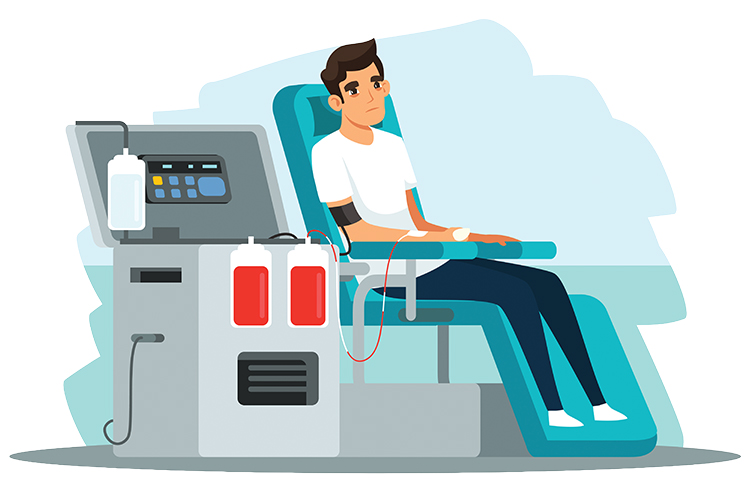
- Haemodialysis, which uses an external machine to filter blood, using a special intravenous catheter or an arteriovenous fistula (created by a vascular surgeon to provide long-term venous access), in a dialysis centre.
- Peritoneal dialysis uses the lining of your abdomen (peritoneum) as a natural filter which can be done at home, using a special indwelling catheter into the abdominal cavity.
What is the function of the kidneys?
The kidneys are vital organs designed to remove toxins and waste, products of cellular function, in the blood. Kidneys balance minerals, such as sodium, calcium, potassium, and other minerals.
Kidneys regulates volume of fluid in the body. Together with the lungs, the kidneys are responsible for the careful balance of the acidity or pH of our blood.
Blood pressure control in the body is intricate and the kidneys form part of blood pressure control.
Kidney dysfunction can cause dangerously high blood pressure. Kidneys also produce the substance, erythropoietin, that stimulates red blood cell production, therefore patients may develop anaemia (low red count) because of kidney failure.
The kidney is a complex structure. You can live with only one kidney, provided it’s functioning optimally to take care of all the functions of both kidneys.
When are kidney cancer patients placed on dialysis?
Both acute and chronic kidney failure patients are offered dialysis. Acute failure implies that the condition is reversible, and you may only need dialysis for a short period.
It also means that if nothing is done quickly, you may not survive. The increased blood flow through one kidney, after removal of the diseased kidney, may be too strenuous for the remaining kidney and it may lead to acute failure. It may adapt over time and recover, or it may not.
If both kidneys are removed, you’ll need dialysis immediately and this will be lifelong.
Chronic kidney failure implies that the condition isn’t reversible, and you may need lifelong dialysis.
Mild chronic dysfunction may have been present at the time of surgery, related to other injury prior to the diagnosis.
Why is there an increased risk of kidney failure in kidney cancer?
Kidney cancer can be a silent disease for a long time. Patients aren’t always aware that there is a slow-growing mass. Not all patients with kidney cancer have blood in their urine and the disease is often diagnosed late when the disease is advanced.
If detected early, the urologist may remove part of the kidney but when it’s bigger or involving the middle part of the kidney where the blood vessels and ureter are, the whole kidney will be removed.
If the other kidney is healthy, this may be uncomplicated but if you have impaired kidney function in the opposite kidney, dialysis may be inevitable.
Rarely cancer is in both kidneys simultaneously though removing both kidneys necessitates dialysis.
What to do to ensure optimal function of kidneys or remaining kidney?
Your kidneys should always be on your mind and although acute or sudden kidney failure is symptomatic, chronic kidney failure isn’t. Kidney health is important even if you have two kidneys.
Controlling blood glucose in patients with diabetes and controlling blood pressure in patients with high blood pressure will help in delaying kidney failure. Both these diseases, alone or in combination, will place you at higher risk to develop kidney failure.
Be careful of products claiming to be natural as certain products may be responsible for kidney dysfunction.
Hydration is important, especially on hot days.
Most importantly, the use and abuse of pain medication, which is readily available is responsible for most kidney injuries. Non-steroidal anti-inflammatories and chronic use of paracetamol-containing pain medication can damage kidneys and when a patient has a nephrectomy (surgical removal of all or part of a kidney) for kidney cancer, the other kidney can’t cope on its own.
Always consult a doctor when pain medication is needed for chronic pain. All medication can be potentially harmful to the body. Don’t assume if the label says herbal or natural, that it’s safe.
Always confirm supplements with your nutritionist, dietitian, and health practitioner to ensure safety. If you feel unwell, especially after a kidney has been removed, contact your health practitioner to do a simple blood test that can be life-saving.
MEET THE EXPERT

Dr Daleen Geldenhuys is a specialist physician and medical oncologist who works at West Rand Oncology Centre at Flora Clinic and the ICON Unit at Johannesburg Surgical Hospital. She treats patients with all types of cancer and enjoys clinical research, and is a member of SASMO, SASTECS, ESMO and ENETS.

Header image by Freepik