
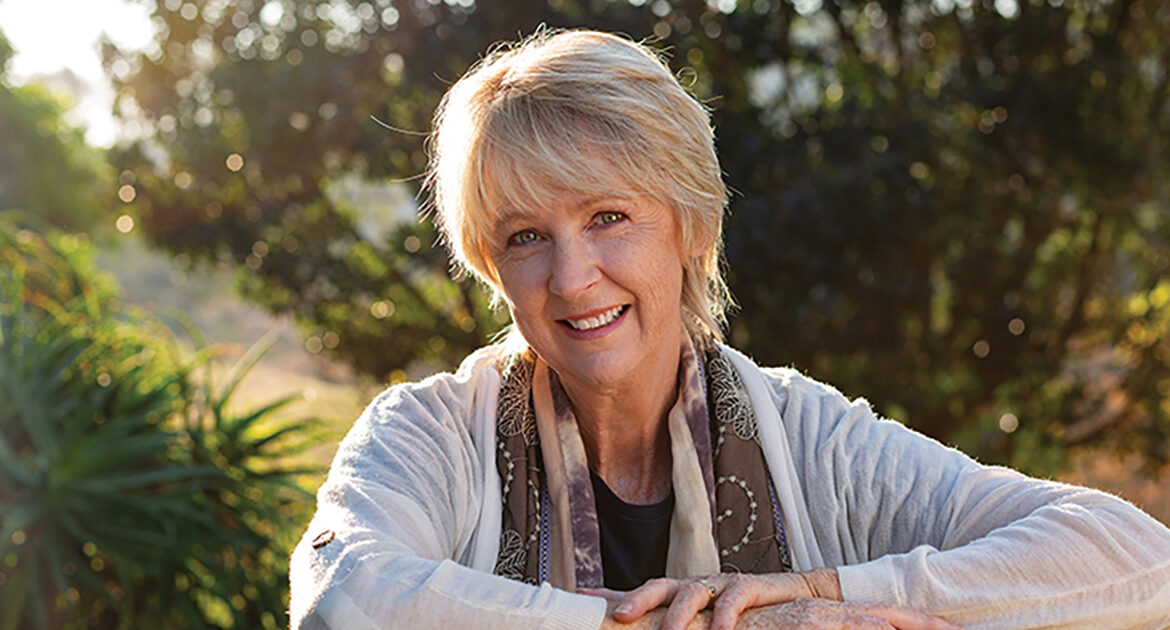
Sandra Keddie – Finding out I have Lynch syndrome
After being diagnosed with endometrial and then colon cancer, Sandra Keddie underwent genetic testing for Lynch syndrome which was positive. She tells her story.
Short on time? Listen to the audio version of this article here, or by using your favourite podcast player
Sandra Keddie (61) lives in Hillcrest, KwaZulu-Natal with her husband.
Learning about Lynch syndrome
It was through her cousin that Sandra first learnt about Lynch syndrome, a hereditary cancer-predisposition syndrome that significantly increases the likelihood of developing several different cancers and sometimes at an earlier age than typically expected.
“My cousin was diagnosed with endometrial cancer, in 2024, and when she was speaking to her doctor about her family history, it was uncovered that her son (who was living in Australia) had a section of his colon removed at a young age due to cancerous polyps being found. He was tested for
Lynch syndrome and found to be positive. My cousin then undertook the genetic test and was also found to be positive. Because I had already had two Lynch syndrome-related cancers, it was highly probable, that I, as a family member, was also positive,” Sandra explains.
Endometrial and colon cancer
At age 49, Sandra was diagnosed with Stage 1 endometrial cancer and 10 years later, at 59, she was diagnosed with colon cancer. The endometrial cancer caught her by surprise, having undergone an investigative procedure only five years prior when her gynaecologist told her she was pristine inside. She opted for a full hysterectomy instead of a partial one due to her age and the risk of ovarian cancer.
The colon cancer was also not an obvious diagnosis to her symptoms of a deep, lingering tiredness that stretched back to five years before the diagnosis and heart palpitations, bouts of arrhythmia, and severe leg cramps at night that began three years before diagnosis.
“I understand now that these symptoms were a result of low iron initially and finally a low haemoglobin due to continual but microscopic blood loss,” Sandra says.
“After a bout of tests, an endoscopy and colonoscopy provided the answer: a tumour in my colon, one that had apparently been growing quietly for years. My diagnosis was unclear, Stage 3 maybe 4.”
Genetic testing
In May 2025, after surgery and chemotherapy for colon cancer, Sandra decided to take the genetic test for the Lynch syndrome gene. Although, there is currently no cure for the genetic condition, understanding that you have Lynch syndrome, allows you to be able to choose to go for more regular and intense screening for earlier cancer detection.
“I had a call with a genetic counsellor prior to her sending out a saliva test pack in the post. It took six weeks for the test to come back, this confirmed that I was positive. I informed family members who could be affected by the same genetics and my next discussions on the way forward took place with my oncologist as I was still undergoing follow-up care,” Sandra explains.
Sandra’s medical aid covered the cost for testing for the MSH6 Lynch syndrome gene, which was the mutation found in her cousin.
This was cheaper than testing for all five of the Lynch syndrome genetic mutations.
Possible precautions
When asked if she knew earlier, what precautions would she have taken, she responds, “Doing my regular cervical screening was the right thing to do but I could’ve gone for more regular colon screenings. Also, I could’ve informed my doctors, allowing them a better understanding and perspective when reviewing my results or suggesting a variety of possible tests more regularly.
I was fortunate that the endometrial cancer was detected early, but not so fortunate with the colon cancer.”
“Knowing I have Lynch syndrome would also have confirmed my decision with regard to having a full hysterectomy or to leave my ovaries behind. Ovaries are important in balancing hormones and delay the onset of menopause and so removing them was a big decision, but now I don’t have to be concerned about possibly developing ovarian cancer which is a risk with Lynch syndrome.”
Current health
Post treatment, Sandra is cancer free. She suffers ongoing shingles, a chemo side effect. but she is concentrating on keeping healthy while undertaking regular screenings for Lynch syndrome cancers.
Header image supplied