
How animals adapt to physical limitations
Dr Andrew Robson highlights what humans can learn from how animals adapt to physical limitations.
Short on time? Listen to the audio version of this article here, or by using your favourite podcast player
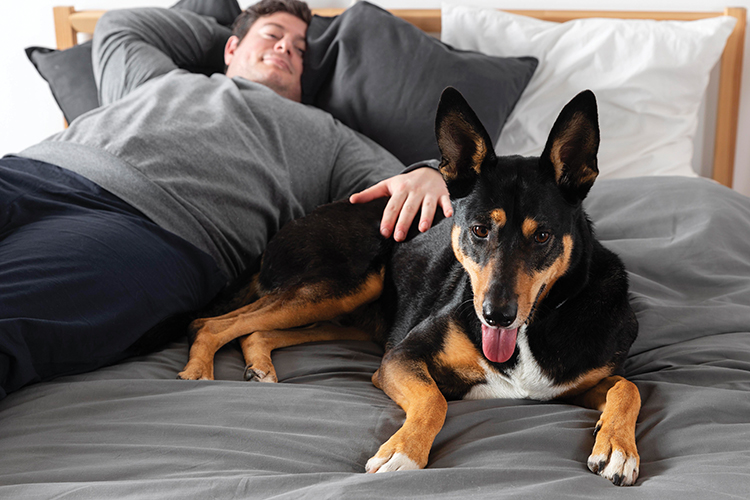
In veterinary practice, physical limitation is common. Limb loss, chronic pain or neurological disease aren’t rare events. What’s striking, however, isn’t the injury itself, but how quickly animals adjust. A dog undergoes an amputation and is walking within days. A cat loses its vision and continues to navigate its home with minimal disruption. These animals aren’t recovering in the traditional sense but rather they are adapting and this distinction matters.
Animals prioritise function. When they are faced with a physical limitation, their response is immediate and practical. For example, redistribute weight, alter movement, or rely on a different sense after losing their vision. There is no attempt to return to a previous normal state. The goal is simply to continue.
In contrast, humans, especially those navigating cancer and its treatment, often face a more complex challenge. The physical changes are significant, fatigue from chemotherapy, reduced mobility after surgery, neuropathy, ostomies, or long-term pain. But the difficulty isn’t only physical, it’s also behavioural.
Patients frequently try to maintain pre-diagnosis levels of activity, even when their capacity has changed. A previously active individual may push to resume full exercise routines too early. Someone experiencing cancer-related fatigue may resist modifying their daily schedule, leading to cycles of exhaustion. Patients with peripheral neuropathy may continue tasks requiring fine motor control without adaptation, increasing frustration and risk of injury.
Adjust early and adjust practically
These are understandable responses, but often counterproductive. Animals offer a simpler model, adjust early and adjust practically.
For example, after a limb amputation dogs will only attempt to distribute weight evenly across a now-missing limb for a short time before realising that something is different. They shift load almost immediately to the remaining limbs, and over time, muscle mass increases to support this change.
Granted, there is an adjustment phase where the animals learn to optimise their new-found limitation. In human terms, this is equivalent to proactively using assistive devices, engaging in targeted physiotherapy, and modifying movement patterns early, rather than delaying adaptation to push through.
Similarly, a blind animal rapidly builds spatial awareness through repetition and sensory compensation. In oncology patients experiencing visual disturbances, dizziness, or neuropathy, comparable adaptations might include restructuring the home environment, improving lighting, removing hazards, or using mobility aids. These aren’t signs of decline, they are functional adjustments.
Cancer-related fatigue is another area where behavioural adaptation is critical. Many patients describe it as one of the most limiting aspects of treatment. Yet, a common response is to maintain previous productivity levels, resulting in worsening fatigue. A more adaptive approach, like what we see in animals, would involve energy redistribution by prioritising essential tasks, incorporating planned rest periods, and accepting a reduced but sustainable level of activity.
Nutrition provides another practical example. Animals with dental disease or oral pain will shift to softer food or alter feeding behaviour without hesitation. In contrast, patients undergoing chemotherapy or radiation may struggle with appetite changes, nausea, or oral discomfort, yet delay dietary adjustments. Early modification, including softer foods, smaller frequent meals, or tailored nutritional support will significantly improve intake and overall condition.
Behavioural flexibility
What underpins all these examples is behavioural flexibility: the ability to change how you function in response to a new limitation.
Importantly, adaptation isn’t passive. It requires active decision-making, choosing to modify routines, accept assistance, or use supportive tools. In clinical oncology, this may involve physiotherapy, occupational therapy, pain management strategies, or psychological support. These interventions aren’t about restoring a previous state, but about optimising current function.
MEET THE EXPERT
Dr Andrew Robson is a veterinarian with a Master of Science degree from Wits University. Based in Johannesburg, Andrew provides the highest standard of care to small animal patients and their families. With a strong interest in companion animal medicine, animal physiology, and client education, he is passionate about strengthening the human–animal bond and supporting pet parents through evidence-based, compassionate veterinary care.

Header image by Freepik