

Tongue reconstruction
Dr Dimitri Liakos explains the surgical options for tongue reconstruction.
The tongue plays an essential role in everyday life. This highly mobile muscle in the mouth allows you to speak, chew, and swallow your food; important functions of everyday life.
But the tongue has so many more intricate functions. It allows you to taste your food, whether sweet or sour. It allows propulsion of food down the throat at the same time as it blocks the airways to prevent aspiration.
Anatomically it’s made up of highly-specialised muscles and taste buds, making the anterior surface of the tongue feel somewhat rough. The underside of the tongue is made up of a smooth, wet mucosal layer.
Tongue cancer
The most common causes of tongue defects arise from oral cancers. The most common cancer of the tongue is caused by squamous cell carcinoma. Risk factors include smoking, alcohol, and oral HPV infections which are now increasing the risk of tongue cancer in younger patients.
Patients with tongue cancer usually present with a non-healing ulcer, which can be painful. Otherwise patients may present with a painless lump in the neck, this is usually a swollen lymph gland.
Prevention is important. These preventative measures include cessation of smoking, decreasing alcohol intake, maintaining a healthy lifestyle, and getting vaccinated for high-risk HPV infection at a young age.
There are different modalities for treating tongue cancer, one being surgical resection. The size of the defect will determine the need for tongue reconstruction or not. If the defect is only 50% or less, usually we do not need to reconstruct the defect as this will allow adequate mobility and bulk for speech and eating. Larger defects will usually require some sort of a reconstruction.
Tongue reconstruction
The aim of tongue reconstruction is two-fold: to maintain mobility of the tongue for speech and provide bulk to allow one to push food against the palate and therefore be able to swallow food.
Reconstruction of the tongue usually involves importing tissue from another body region; this is known as a flap. Local or regional flap options include donor areas from the submental area (directly under the chin), cheek, or even the neck. These options are not usually first choice options, but they can be used for smaller defects.
The gold standard option for a tongue reconstruction is a free flap from a distant donor area of the body. A free flap is a transplant of tissue from one area to another. The tissue needs to be re-vascularised (blood flow into and out of the flap needs to be restored). This is done by performing a micro-vascular anastomosis from the recipient vessels in the head and neck to the flap vessels (artery and vein). These vessels are usually very small (2-3mm), and great care needs to be taken.
If anatomically viable, a nerve coaptation may also be done to renew innervation into the flap. This will allow sensation back in the reconstructed tongue. These procedures are highly technical and can only be performed at specialised units around the country.
Flap donor sites most commonly include the forearm and thigh. Sometimes a skin graft is required to close the forearm donor site. However, it’s sometimes preferred due to the thin nature of the forearm skin which allows a flexible and pliable flap.
Recovery
After surgery, patients are generally cared for in ICU until they are healing well and allowed to drink and eat per mouth. Patients generally recover well and are able to return to their daily functions, depending on the size of the original defect size.
Any lesion in the mouth that is not healing or continues to grow, or lump in the neck should be seen to by an ear, nose, and throat (ENT) surgeon.
MEET THE EXPERT
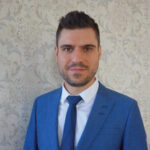
Dr Dimitri Liakos is a plastic and reconstructive microsurgeon with special interest in oncology reconstruction. He is currently a consultant plastic surgeon at WITS Donald Gordon Medical Centre. The unit specialises in head and neck, breast, and other oncology reconstruction.

Header image by Freepik