
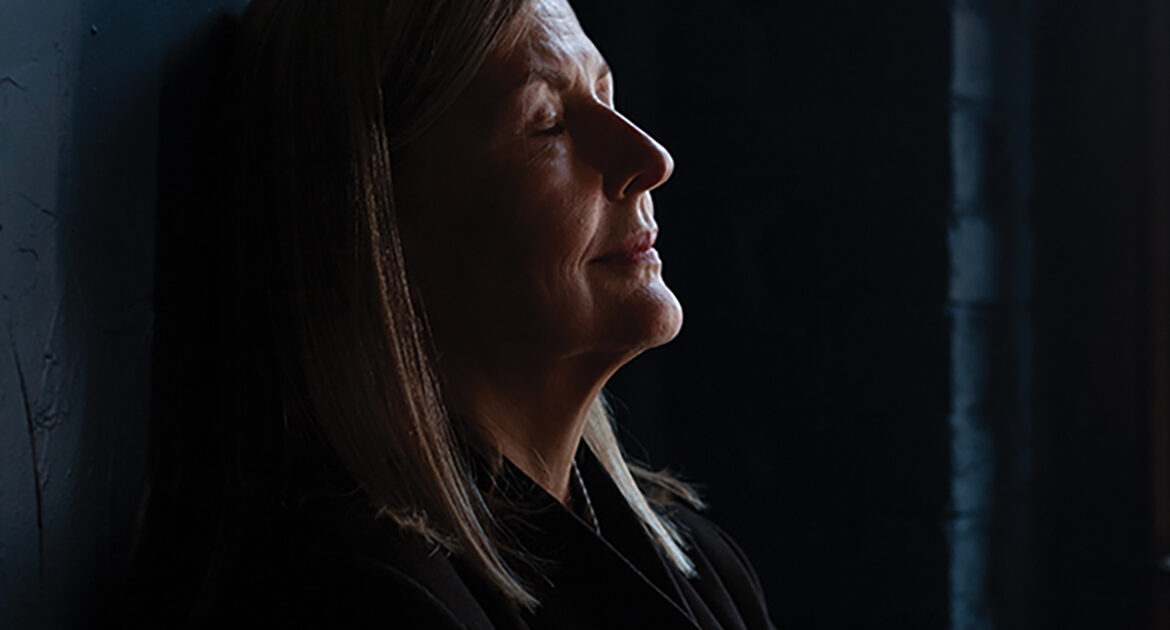
Why my grief only misbehaves after 10pm
Bonni Suckling candidly shares why after 10pm, her brain clocks out of logic and into her feelings.
Short on time? Listen to the audio version of this article here, or by using your favourite podcast player
Hello. I’m Bonni. I’m your new grief columnist. I have qualifications and have done the respectable adult things. I can tick boxes and fill in forms and sit in rooms where people say words like stakeholder.
But my most devastating credential is this: I’m the mother of a dead child. Yes. Dead.
It’s a horrible word. It’s blunt. It’s uncomfortable. It makes people shift in their chairs. But that’s the reality of loving someone who is gone. It’s harsh. It’s final. It’s not poetic.
I’m going to use honest language for honest things. Because grief is not gentle; it’s raw and awkward and often deeply inconvenient.
Grief doesn’t expire
My son, Jed, died fifteen years ago. Which sounds like a long time. Long enough for people to assume I’m better now. Long enough for grief to surely have expired. Like milk. Or yoghurt. Or sympathy. It hasn’t.
If you’re reading this, there’s a good chance you also carry grief. Maybe it’s a child. Maybe it’s your husband. Your sister, mother, or friend. Someone who should still be here. So, this column is about us.
Grief is always with me
All day. Everywhere. After fifteen years, it has somehow learned how to behave during daylight hours. It’s still there. It never leaves. It just knows how to be polite.
By day, I’m impressively functional. I run a foundation, Rainbows and Smiles, for children with cancer. I’m a gym instructor.
I send emails about organising things and speak in almost full sentences. I nod wisely in meetings and even laugh at jokes that aren’t funny. I look like someone who has it together.
Grief comes along for all of that. It just sits quietly. Hands folded. Mouth shut. Like a well-mannered child in a waiting room. I’m a responsible adult.
Grief after 10pm
But after 10pm, grief gets naughty…unfiltered. The house goes quiet. The kettle is off. The world stops needing me. Netflix asks, “Are you still watching?”
And grief stretches. “Right,” it says. “Everyone’s asleep. We can be honest now.”
Grief after dark has no social skills. It waits until I’m in my pyjamas, with one sock on, a face full of oily night cream, and no emotional armour left. Then it starts asking questions. Do you remember how they laughed? Do you wonder who they’d be now? I tell it to stop; it doesn’t.
Daytime grief is polite. Night-time grief is feral. It reminds me that while the world has moved on, my heart keeps time in before and after. It reminds me that I’m a mother to a child who does not grow older.
But I suspect your grief does this too. I suspect yours behaves beautifully in public. Lets you function. Allows you to be strong. Smiles politely at people who say, “You’re doing so well.”
And then, when the lights go out and the world goes quiet, it finally takes off its shoes and climbs onto the bed with you.
Because night is honest. Night is where you don’t have to perform. Night is where love has nowhere to hide. And here’s the strange part: I don’t hate those moments.
Because those late-night conversations are where our people live now. In memory. In wondering. In the ache that proves love didn’t die with them.
Grief after 10pm is not a failure
It’s proof. Proof that you loved. Proof that you still do. Proof that your heart remembers, even when the world forgets.
So, if your grief misbehaves after dark, you’re not broken. You’re just quiet enough to hear it.
And maybe…just maybe…that’s when love speaks the loudest.
MEET THE EXPERT

Bonni Suckling is the founder of Rainbows and Smiles Foundation. In 2022, she completed her Paediatric Post Grad Diploma, a testament to her dedication to improving paediatric healthcare. She has played a pivotal role in establishing paediatric palliative care support groups, offering solace and guidance to families. She is also a gym instructor and endurance athlete.

Header image by Freepik