

The benefits of support groups
We learn about the benefits of support groups, specifically treatment specific support groups for prostate cancer.
Prostate cancer is known to cause significant psychosocial distress, with 30-50% of men reporting a psychosocial burden due to their diagnosis, regardless of disease stage or progression.1
The initial diagnosis of cancer is usually highly stressful for men and their families. This is followed by the anxiety of deciding which is the best treatment option (in settings where options are available), followed by coping with side effects that are often highly embarrassing and frustrating for men.
The subsequent ongoing monitoring further adds to the anxiety and stress, particularly PSA anxiety for men post-treatment for localised prostate cancer.
The impact of prostate cancer treatments on sexual function and masculinity shouldn’t be underestimated as they can significantly affect a man’s self-esteem and partner relationships.
The power of connecting
Online and in-person prostate cancer support groups have been shown to improve quality of life, yet they remain underutilised by patients and clinicians. Men are often reluctant to discuss their experiences and express their emotions in face-to-face conversations.
Online support groups have the advantage of offering a degree of anonymity and therefore, potentially, a safer environment for men to discuss what are often deeply personal issues.
“The underlying connecting element of a support group is the mutual benefit gained by expressing one’s own experience of having cancer while at the same time participating in the experiences of others.”3
Traditionally, support groups have been run by non-profit organisations or by individual survivors who have felt the need to bring men with prostate cancer together. South Africa’s diverse patient groups (private healthcare vs public healthcare) can make it challenging to find common ground and even a common language for support group members.
Patients undergoing active treatments for localised disease generally fall into two main groups, namely, those undergoing a radical prostatectomy and those undergoing brachytherapy.
RALP support group
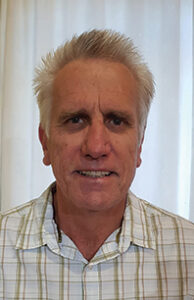
One example of a highly successful support group is a group that was started in September 2017 by Dr Conray Moolman and one of his patients, Paddy O’Brien.
At the time, Paddy was scheduled for a robotic-assisted laparoscopic radical prostatectomy (RALP) and wanted to connect with other patients that had undergone the procedure. He waS provided with phone numbers but felt that this would be too intrusive, so suggested to Dr Moolman that they start an email support group.
New patients were invited to join as they were scheduled for a RALP. This enabled the men to be better prepared for what was coming.
Paddy’s unique ability to make new members feel welcome and to encourage open honest discussions has been one of the key ingredients for the group’s success. Paddy also attributes the groups success to the recruitment process. “Dr Moolman’s receptionist invites new members to sign up as they are scheduled for the procedure. This constant flow of new members joining the group encourages existing members to reflect again on their own emotions and at least offer experiential advice or reflection,” Paddy says.

Growing in numbers and brotherhood
The group started with a handful of members and has since grown to over 300. For many men the support group is useful before and after surgery, and particularly for seeking support with post-RALP side effects.
Sometimes it’s as simple as seeking advice on what incontinence pads to buy or asking other men how they have managed their erectile dysfunction. Once they have recovered, they often move on.
Fortunately, there is a small group of men who remain active, and they are essential to the group’s success as they encourage new patients who are about to undergo treatment and support them during the recovery phase.
Positive feedback
We asked some group members how they have benefitted by belonging to the group:
“As a RALP patient, with post-op radiation and 18 months of ADT treatment, I feel that the group has provided me with an invaluable source of support. Reading the members shared perspectives and views is often extremely thought-provoking. The feelings shared typically range from shock, bewilderment, anger, frustration, determination, empathy, and sometimes good humour. These emotions and the online views expressed are moderated with confidentiality and tact. It’s reassuring to realise that I’m not alone in this battle. It has been important for me to understand that although this feels like an extremely private health challenge, there are so many of us on a similar journey. All of us are wrestling with our own physical and psychological challenges resulting from our unique prostate cancer treatments. All in all, the honest sharing of views is constructive as it provides us with a deeper ongoing understanding of prostate cancer. It certainly helps me feel supported and less isolated as I continue this roller coaster path to recovery.”
“For me the support group shows me that I’m not alone with the Big C and others care when asked for advice. On the other hand, I see the many different paths which our members go through. Everybody has a (slightly) different story to tell.”
“It helped me so much when I joined the group and received advice and thoughts of the members regarding the route for me to take. During those difficult times it made such a difference to me making a decision between surgery or radiation.”
“Having recently been diagnosed with Stage 2 prostate cancer, I heard about a group of fellow survivors of the same condition and their journeys. So, I asked to be added to the group. After explaining my short journey, it has been very informative to hear everyone else’s story. I have found it very helpful to understand what challenges each person has gone through in their recovery.”
The challenges faced
In 2019, the Prostate Cancer Foundation (PCF) approached Paddy and Dr Moolman with the idea of expanding the support group to include patients who had approached the foundation to join a support group, irrespective of what treatment they had undergone or who their treating doctor was.
Although this worked initially, there was a loss of focus. One of the major reasons for the success of the RALP support group has been the common bond that men feel due to having the same treatment.
Support groups aren’t without their challenges, every patient has a different experience, and they aren’t all good. One patient’s negative experience (often given without providing full context) or misinformation can put off other patients. This is where the importance of a well-informed moderator becomes critical.
In one instance, a patient in Dr Moolman’s RALP support group, who had undergone a salvage RALP after failed brachytherapy, attempted to warn all men on the group of the horrific incontinence rates caused by a RALP and to avoid the procedure at all costs. It’s well known that incontinence rates for men undergoing a salvage RALP after brachytherapy are considerably higher than for men who are undergoing a RALP without any other previous treatment, but the patient failed to provide this background information.
When this occurs, a group moderator is essential to correct any misinformation. Ideally this should be someone other than the facilitator with sufficient medical knowledge to be able to set the record straight.
The other challenge is the endless amount of unvetted information that patients share from the internet. Managing the group becomes a juggle between not being overly restrictive but also not allowing misinformation to replace scientific facts.
Two separate focused groups
At the end of 2023, the two groups were split, and PCF now runs a separate support group for men irrespective of their cancer stage or treatment choice. However, PCF remains committed to the concept of treatment specific support groups and continues to provide support to Dr Moolman’s RALP email support group.
PCF’s CEO Andrew Oberholzer elaborates, “Treatment specific support groups work well, as men are going through the same experience and often grapple with the same side effects.” This creates a sense of camaraderie where men can feel safe to share their challenges and obtain support from others who have walked the same path. Ultimately, we’d like to have a support group for men undergoing brachytherapy and another group for men with advanced prostate cancer. However, email support groups require daily monitoring, so we would need committed volunteers and sufficient financial support to achieve this.”
If you would like to join PCF’s email support group, contact Andrew Oberholzer on 083 616 0162 or email [email protected]
References
- Santarelli S, Ambrose N, Taylor Z, et al. Cureus 13(9): e18208. DOI 10.7759/cureus.18208.
- Adikari A, de Silva D, Ranasinghe WKB, Bandaragoda T, Alahakoon O, Persad R, et al. (2020) Can online support groups address psychological morbidity of cancer patients? An artificial intelligence-based investigation of prostate cancer trajectories. PLoS ONE 15(3): e0229361. https://doi.org/10.1371/journal.pone.0229361
- Jablotschkin M, Binkowski L, Hoopii RM. et
MEET THE EXPERT
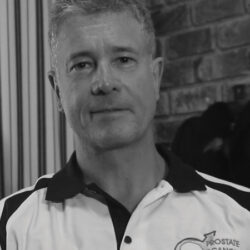
Andrew Oberholzer is the CEO of the Prostate Cancer Foundation of South Africa.
Header image by Freepik
