
Endometriosis and the link to female cancers
Dr Sumayya Ebrahim sheds light on the link between endometriosis and female cancers.
You can listen to this article below, or by using your favourite podcast player at pod.link/oncologybuddies
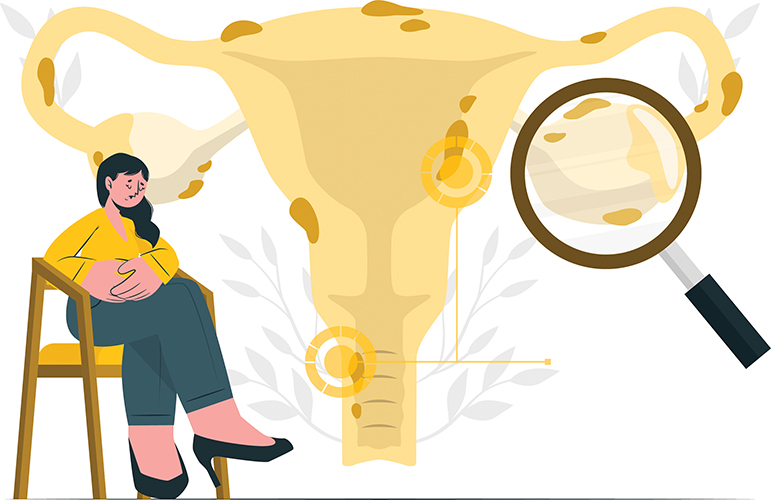
Endometriosis is a medical condition that occurs when endometrial cells exist outside the uterus – in or around the ovaries, fallopian tubes, in the pelvic cavity, and distant organs. Normally these cells are only found in the uterine lining. Here, they usually grow during the hormonal cycle and shed as menstruation during a period.
Women who have endometriosis can struggle with severe period cramps, chronic pelvic pain, painful sex, and even infertility.
Worldwide, up to 18% of women are affected. It’s most common in women of childbearing age. Endometriosis also seems to run in families.
There are many theories about the causes of endometriosis, but experts have to date not been able to pinpoint an exact cause. Hormones like oestrogen, immune system dysregulation, and neurological factors involving pain responses, all seem to play a role.
It has been postulated that because endometriosis is linked to chronic inflammation, a dysfunctional immune system, and metabolic changes within the body, it has the potential to also be associated with an increase in the risk of female cancers.
So, what is the evidence?
Ovarian cancer
As far back as 1925, a researcher by the name of Sampson noticed a connection between endometriosis and cancer. He went on to publish an article about a patient who had ovarian cancer. He had detected endometriosis within this cancer.
Today, we know from further research, that endometriosis is a risk factor for ovarian cancer.
As recently as July 2024, an American study published in The Journal of The American Medical Association, found that overall, women with endometriosis had more than four times the risk of ovarian cancer as those without endometriosis.
Furthermore, the risk was related to the type of endometriosis: deep infiltrating endometriosis and ovarian endometriomas (chocolate cysts) had the greatest risk. Women who experienced this level of disease, were nine times more likely to be diagnosed with ovarian cancer than women without endometriosis.
The types of ovarian cancer that occur in a background of endometriosis are endometrioid ovarian cancer and clear cell ovarian cancer.
It’s apparent from the literature that endometriosis is more likely to develop into ovarian cancer in the following situations:
- Larger number of menstrual cycles – early age of first period and later menopause.
- Less pregnancies – infertility or no children.
- Shorter breastfeeding duration or never having breastfed.
- Hormonal imbalance – oestrogen dominance and progesterone deficiency.
- Chronic inflammation and high-stress environments.
Uterine cancer and breast cancer
Endometriosis is generally considered to be an oestrogen-dependent disease. It’s not known to occur before puberty or after menopause when oestrogen levels are much lower or undetectable.
Breast cancer and endometrial or uterine cancers are also most often oestrogen dependent. In theory then, you would expect higher incidences of these two cancers in women who already have endometriosis. However, the evidence from the available studies isn’t conclusive. Initial evidence pointed towards a higher incidence of uterine but not breast cancer.
In 2022, when data was pooled from different studies in what is called a meta-analysis, the findings were that: both breast and uterine cancer incidence was higher in endometriosis sufferers. This prompted the reviewers to recommend routine screening for both these cancers in long-term management of women who were previously diagnosed and treated for endometriosis.
The situation isn’t so simple, however. Whilst mammography exists and is currently the best available screening tool for breast cancer, screening for uterine and endometrial cancer is tricky. Currently, there is no consensus on early detection strategies, and the diagnostic practices, such as vaginal ultrasound, hysteroscopy, and endometrial biopsy are invasive, costly, and not always accurate. Nevertheless, these tests are what is used today.
The hope is for more research to be conducted for better solutions.

MEET THE EXPERT – Dr Sumayya Ebrahim
Dr Sumayya Ebrahim is a gynaecologist in private practice in Johannesburg. She is also a blogger. Check out her blog Vaginations by Dr E on vaginations.co.za
Header image by Freepik
