
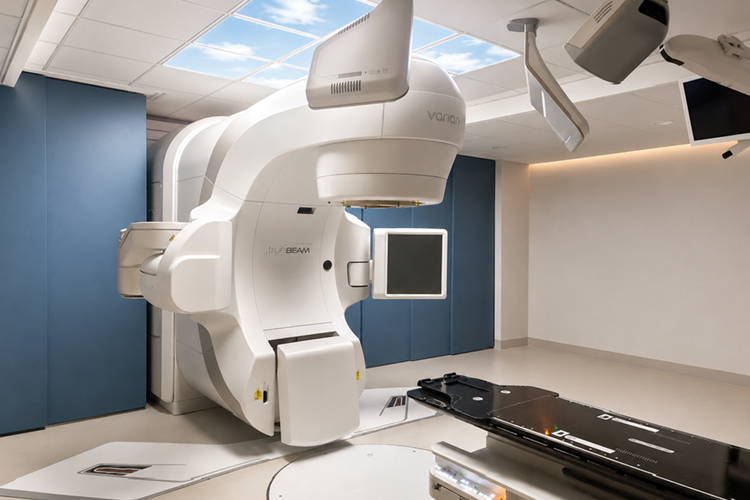
New technology helps target radiation more precisely
The Wits Donald Gordon Radiation Oncology Unit installs sub-Saharan Africa’s first full Brainlab ExacTrac Dynamic® device.
You can listen to this article below, or by using your favourite podcast player at pod.link/oncologybuddies
When a tumour is small or lies close to healthy tissue or a sensitive organ, there is very little room for error. Radiation must reach the area being treated while limiting unnecessary exposure to surrounding tissue.
The Wits Donald Gordon Radiation Oncology Unit, located at the Wits University Donald Gordon Medical Centre in Parktown, Johannesburg, has become the first centre in sub-Saharan Africa to install the full Brainlab ExacTrac Dynamic® device.
The technology helps the radiation therapy team position and monitor a patient with high accuracy before and during treatment. This is particularly important when treating small, complex, or difficult-to-reach tumours.

Watching for movement during treatment
Patients can move slightly during radiation treatment, sometimes without realising it. Tumours in areas such as the chest and abdomen may also be affected by normal breathing.
ExacTrac Dynamic® uses cameras to monitor the patient’s surface and low-dose X-ray images to check the position of internal anatomy. It compares this information with the position set out in the patient’s treatment plan.
If the patient moves beyond the limits set by the treatment team, the radiation beam can be paused. The team can then check and correct the patient’s position before treatment continues.
For patients, this provides an additional layer of monitoring and helps the clinical team keep the radiation closely aligned with the intended treatment area.
What does this mean for patients?
The technology provides:
- Careful positioning before radiation treatment begins.
- Continuous monitoring during the treatment session.
- The ability to pause the radiation beam if the patient’s position changes.
- Added precision when treating tumours close to healthy tissue or sensitive organs.
- Advanced support for selected tumours affected by breathing or other movement.
The device is particularly important for patients receiving stereotactic treatments. Stereotactic radiosurgery delivers concentrated radiation to small, precisely defined targets in the brain. Stereotactic body radiation therapy uses the same highly focused approach for tumours elsewhere in the body. In both, accurate positioning is critical to protect nearby healthy tissue.

Every patient deserves access to safe, advanced cancer treatment, says Tamlyn Abbott, General Manager of the Wits Donald Gordon Radiation Oncology Unit.
She continues,“This device gives our team another way to check a patient’s position throughout treatment and respond if it changes. For patients, that means greater confidence that the radiation is being delivered as closely as possible to the area their doctors have planned.”
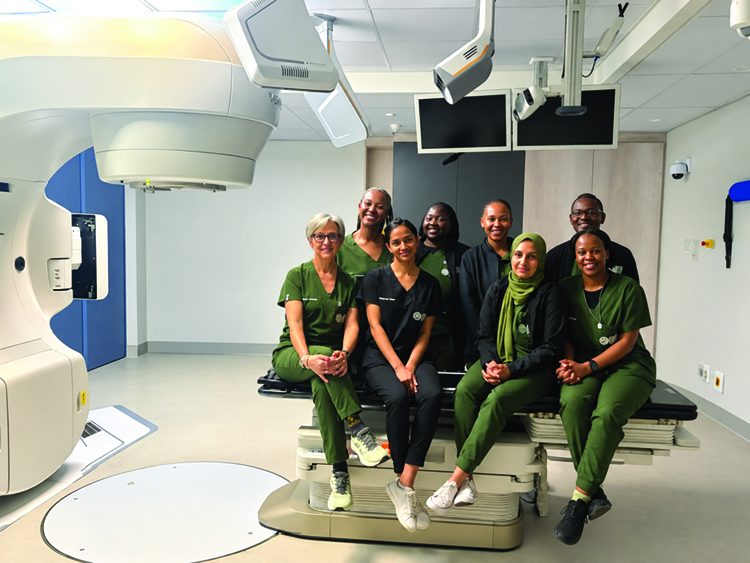
Technology supported by a specialist team
The ExacTrac Dynamic® device works alongside the Unit’s Varian TrueBeam linear accelerator, which delivers the radiation treatment.
It also complements Brainlab Elements Radiosurgery Solutions, which are indication-specific treatment planning workflows. They combine software applications for accurate image co-registration, automated contouring of tumours and organs at risk, consistent radiosurgery planning, and efficient treatment delivery—all designed to support precise treatment while helping to minimise toxicity. Together, these technologies connect the patient’s treatment plan with positioning and monitoring during delivery.
The technology is one part of a much larger clinical process. A multi-disciplinary team of a radiation oncologist, medical physicists, dosimetrists, and radiation therapists manages every patient at the Wits Donald Gordon Radiation Oncology Unit.
The team develops an individual treatment plan based on the patient’s diagnosis, the tumour’s location and characteristics, and the healthy tissue and sensitive structures around it. The Unit also works closely with referring doctors throughout the patient’s treatment.

About the Wits Donald Gordon Radiation Oncology Unit
The Wits Donald Gordon Radiation Oncology Unit provides specialised radiation therapy at the Wits University Donald Gordon Medical Centre in Parktown, Johannesburg.