
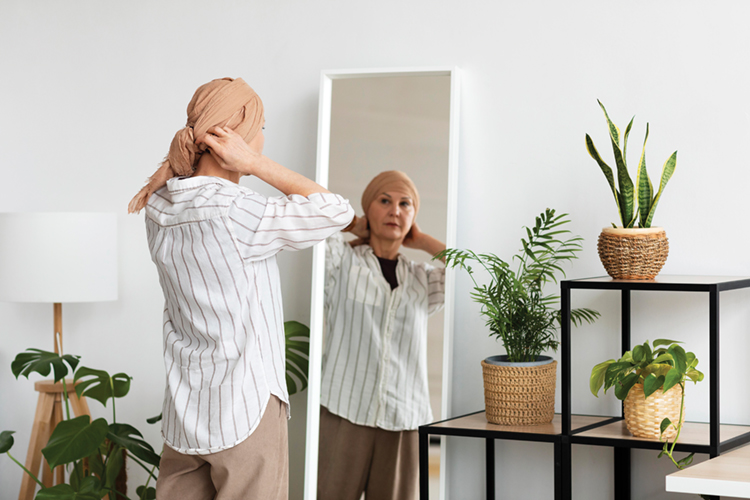
Entering your new reality
Pieter le Roux, a cancer survivor and counsellor, shares helpful advice on navigating your reality after cancer.
You can listen to this article below, or by using your favourite podcast player at pod.link/oncologybuddies
What happens in life after cancer? What does life look like after this profound journey? Is it possible to go on with life exactly as it was before?
This year marks exactly 12 years since my cancer treatment and bone marrow transplant. I can tell you with absolute honesty that my life changed profoundly after that.
To put it into perspective, imagine the cancer experience as a massive, multi-layered burger. It has the bun, patty, garnish, and for some, it’s a towering double or triple burger. You can’t realistically shove that entire burger into your mouth, swallow it in one single gulp, and then wipe your hands as if nothing happened.
No one would expect you to do that with a physical meal, so why is it expected when processing the immense trauma of going through cancer? I’ve heard how often people are told, You have gotten a second chance, just go on with your life. Yet, you’re still sitting with an experience that is incredibly real, intense, and monumental. You can’t swallow it whole; you need time to digest it, bite by bite and layer by layer.
Entering a new reality
What you experience post-cancer isn’t going back to your old life. It’s entering an emerging reality. It’s entirely new, much like bringing home a firstborn child. You don’t have all the answers or all the knowledge right away, and that is perfectly okay.
It’s unknown, and while that can be daunting, it’s also an invitation to accept this chapter as something new, and to take the pressure off yourself to have it all figured out. Just as a new baby takes time to grow, your new way of living emerges as you go along. You’ll discover different parts of yourself living in entirely new ways. Part of this emergence is accepting that things will not be the same. The process is organic, revealing itself step by step on your journey.
Most importantly, this is your new reality. Very often, we hear other people’s stories and experiences, and the expectation is that your journey should mirror theirs. It shouldn’t. This is your unique reality, and it’s about learning to live out that specific, authentic part of yourself.
Helpful advice
Here are practical steps I found helpful in my own journey:
- First and foremost, give yourself time. Time to work through the trauma of what happened to you. Time for your mind to clear. And time to truly digest the multi-layered burger that was placed on your plate. This isn’t a cliché case of “Time heals all wounds.” Rather, this is about deliberately allowing yourself the time required to find your own new, unique way forward.
- Move toward accepting that things will be different. They must be. Your perspective has shifted completely. Your way of thinking, everything you felt and experienced, has deeply impacted you. And let’s not forget the immense changes your body went through. True acceptance takes time.
- It also means allowing yourself to enjoy life again. Not just the grand milestones, but the small, everyday moments. You are allowed to relish simple things: time spent with family and friends, a good dinner, or simply sitting in the sun and enjoying nature again. Crucially, allow yourself to do this without feeling guilty that others didn’t get that same second chance.
- Even if you had a wonderful support system, cancer is still an intensely personal and often lonely journey. As you move forward, allow yourself to actively re-engage with others. That might include talking to a counsellor or a therapist to help you digest everything and gain perspective on your new reality. It’s also about celebrating the path you have walked with your loved ones, reaffirming those connections, and embracing life together.
- Lastly, celebrate what you achieved. I spoke to a survivor who said his treatment was the Everest that he climbed. For you, it might be an image like running a marathon or surviving a tough boxing match. The point is, you did it, and you overcame it. Own your achievement and celebrate yourself for what you did. By acknowledging it, you are allowing this new reality to emerge, and you now can fully step into your new life.
MEET THE EXPERT

Pieter le Roux, a counsellor with more than a decade of experience in the oncology field, is the founder of Pivot Point Cancer Support. He is dedicated to providing specialised psychosocial care, helping both patients and their families navigate the emotional and practical challenges of a cancer diagnosis.
Header image by Magnific