
Dealing with glioblastoma
Dr Mia Hugo unpacks glioblastoma, the most common and aggressive form of primary brain cancers.
A lightning strike of a diagnosis
GBMs can occur at any age, but most commonly in adults over the age of 65.
The majority of glioblastoma patients have no family history or identifiable risk factors. Some genetic syndromes like Li-Fraumeni syndrome may predispose patients to GBM (<1% of GBMs). Very rarely exposure to ionizing radiation as a result of radiation for childhood brain tumours or leukaemia may also be a risk factor for high-grade gliomas.²
The COSMOS epidemiological study showed no association between mobile phone usage and gliomas³, nor is there an association with other lifestyle factors, such as smoking or alcohol consumption.¹
In most cases, GBMs present out of the blue with no causative factor identified.
Don’t ignore those pesky headaches
The onset of symptoms is often over a short period of time, often weeks to months as GBMs grow quite quickly. The symptoms will vary based on the primary location of the tumour but most commonly presents with persistent or worsening headaches, nausea, vomiting, and new onset seizures.4
Dramatic symptoms include one-sided weakness, visual changes, or difficulties with speech. Other times, the symptoms can be subtle, such as changes in memory or personality or behavioural changes.
Unexplained and worsening headaches and other neurological symptoms need to be investigated.
Looking under the hood
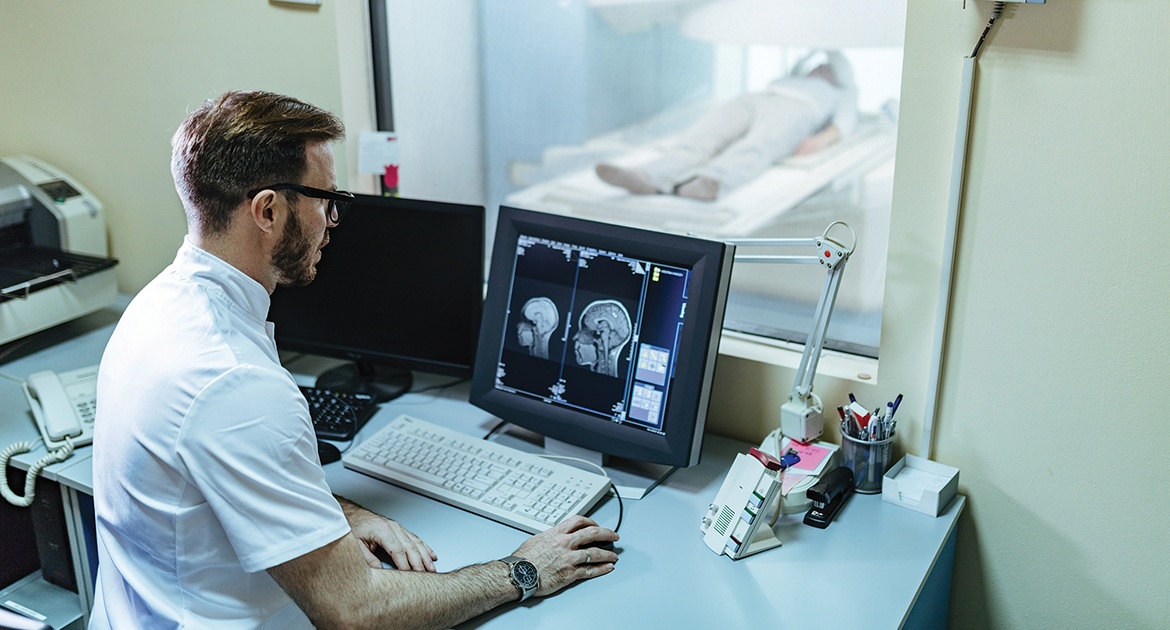
Concerning symptoms will initiate imaging: a CT or MRI of the brain. Should the CT brain show something suspicious, it should be followed by an MRI brain as it provides better soft tissue (brain) resolution.
Utilising MR spectroscopy and MR perfusion-weighted imaging to map metabolic activity helps differentiate between a low-grade or high-grade brain tumour which is important in determining next steps.4
It looks like a GBM – now what?
The management of glioblastoma requires a multi-disciplinary team approach. This team is usually made up of a radiologist, neurosurgeon, pathologist, radiation oncologist, medical oncologist, specialist nurses, rehabilitation staff, and palliative care support.6
The first step is usually surgery. The goal of surgery is for maximal safe resection which involves removing as much of the tumour as safely as possible. Surgery serves multiple purposes: removal of the tumour can help improve symptoms and relieve pressure on the brain and, importantly, it allows the neurosurgeon to access tissue to confirm the diagnosis. Pathologists also now look for MGMT promoter methylation (which predicts chemotherapy response) and IDH mutations to categorise the tumour accurately.
Surgery is followed by radiotherapy due to the infiltrative nature of the disease. GBMs are notorious for being highly-infiltrative, with tumour cells that grow into the surrounding normal tissue beyond what the borders seem like on scan or in surgery.
Radiotherapy is targeted to the original site of disease as well as a margin that accounts for potential areas of tumour spread or infiltration around the tumour. The goal of radiotherapy is to both target any remaining tumour cells and to delay tumour regrowth.
For grade 4 gliomas, a typical course of radiotherapy is around six weeks of daily radiation, and it’s delivered using highly advanced techniques to try and spare as much healthy, normal brain tissue as possible. For fit patients, a six-week course of 60 Gy is standard. However, for elderly patients, a shorter course of three weeks (hypofractionated radiation) can also be recommended.6
Radiotherapy is mostly given concurrently with chemotherapy. The standard chemotherapy remains an oral chemotherapy known as temozolomide.
This is a tablet that is taken once a day whilst on radiotherapy and then for several months after the completion of radiotherapy.5
Be prepared, but never give up hope
Close surveillance following completion of initial treatment is important. Unfortunately, glioblastoma often recurs, with the highest risk in the first two years post treatment.
Treatment options at the time of recurrence are tailored to each case based on age, general health, tumour features, and response to previous therapy.
They can include: surgery, reirradiation with conventional or stereotactic radiation, chemotherapy/systemic therapy, clinical trials, or best supportive care.
Difficult disease to cure
Despite advances in technology and diagnosis, it’s still a difficult disease to cure. Early diagnosis and multi-disciplinary management are important, and research is ongoing looking for new treatments to improve outcomes.
Ongoing research looks at targeted therapy, vaccines, immunotherapy, and novel radiotherapy delivery techniques. Tumour treating fields (TTF) uses the delivery of low-intensity electric fields to the scalp in addition to radiation and chemotherapy, with the goal of slowing tumour growth in selected patients.7
Trials looking at personalised dendritic cell vaccines and CAR T-cells are showing some promise.¹ It’s important for the treating team to consider participation in clinical trials, especially in recurrent GBM.
Optimise quality of life
Glioblastoma is known to be an aggressive cancer and treatment goals are aimed at extending survival and allowing you to experience meaningful time and to optimise quality of life.
Good supportive care is essential from the start since the journey can be tumultuous for both you and your family. With such a high recurrence rate, it’s best to both prepare for the worst but at the same time hope for the best, as there is a small group of patients who can have a good quality of life for more than five years between the initial diagnosis and recurrence, dependent on age, size and subtype at diagnosis.
Every patient’s situation is unique, and open and honest communication with your medical team is valuable in choosing the right treatment path, both at the start of the journey and if there is a diagnosis of a recurrence.
References
- Sipos D, Raposa BL, Freihat O, Simon M, Mekis N, Cornacchione P, Kovács Á. Glioblastoma: Clinical Presentation, Multidisciplinary Management, and Long-Term Outcomes. Cancers (Basel). 2025 Jan 5;17(1):146. doi: 10.3390/cancers17010146. PMID: 39796773; PMCID: PMC11719842.
- American Brain Tumor Association. Glioblastoma (GBM) (https://www.abta.org/tumor_types/glioblastoma-gbm/). Last reviewed 6/2024. Accessed 26/02/2026
- Feychting M, Schüz J, Toledano MB, Vermeulen R, Auvinen A, Harbo Poulsen A, Deltour I, Smith RB, Heller J, Kromhout H, Huss A, Johansen C, Tettamanti G, Elliott P. Mobile phone use and brain tumour risk – COSMOS, a prospective cohort study. Environ Int. 2024 Mar;185:108552. doi: 10.1016/j.envint.2024.108552. Epub 2024 Mar 2. PMID: 38458118.
- Gilard V, Tebani A, Dabaj I, Laquerrière A, Fontanilles M, Derrey S, Marret S, Bekri S. Diagnosis and Management of Glioblastoma: A Comprehensive Perspective. J Pers Med. 2021 Apr 1;11(4):258. doi: 10.3390/jpm11040258. PMID: 33915852; PMCID: PMC8065751.
- Amaral, T., M. Ottaviano, and A. Arance. 2025. “High Grade Malignant Glioma: ESMO Clinical Practice Guideline.” Annals of Oncology 36(1):45-62.
- American Society for Radiation Oncology (ASTRO). 2025. “Radiation Therapy for WHO Grade 4 Adult-Type Diffuse Glioma: An ASTRO Clinical Practice Guideline.” Practical Radiation Oncology 15(2):110-125.
- Li X, Liu K, Xing L, Rubinsky B. A review of tumor treating fields (TTFields): advancements in clinical applications and mechanistic insights. Radiol Oncol. 2023 Sep 4;57(3):279-291. doi: 10.2478/raon-2023-0044. PMID: 37665740; PMCID: PMC10476910.
MEET THE EXPERT
Dr Mia Hugo is a radiation oncologist in private practice. She participates in weekly multi-disciplinary oncology team meetings for breast, urology, gastrointestinal, gynaecological, and head and neck cancers. She provides radiation to patients at Wits Donald Gordon, Netcare Milpark, Pinehaven and Olivedale hospitals, as well as at Busamed and 200 Rivonia Medical Centre.
Header image by Freepik