Bringing the gap
We chat to Prof Vernon Louw, President of the South African Clinical Haematology Society, about the recent 17th Annual Haematology Oncology Conference.
You can listen to this article below, or by using your favourite podcast player at pod.link/oncologybuddies
What was the goal for HaemOnc 2025?
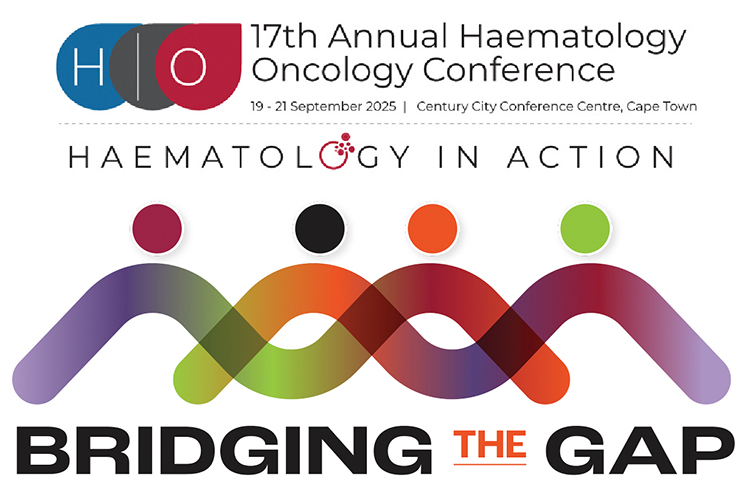
The theme for HaemOnc 2025, Bridging the Gap, captured the central mission of the meeting, namely to close the distance between discovery and delivery, laboratory and clinic, data and patient, regions and resources, and between different generations of clinicians and scientists.
A key element of our vision was to bridge the gap between clinicians and scientists, pathology and clinical medicine, and the laboratory and the bedside.
The goal was to create an environment where everyone (basic scientists, haematopathologists, clinical haematologists, oncologists, technologists, pharmacists, and patient advocates) could engage as one community.
Was that goal achieved?
Yes, I believe it was. HaemOnc 2025 brought together over 380 delegates, 14 international speakers, and seven outstanding local experts. The energy in the sessions, the quality of discussion, and the sense of community all reflected how far we’ve come as a field. We saw bridges being built not just in science, but in relationships, collaboration, and shared purpose.
What was the highlight?
There were many highlights, from the academic excellence of the presentations, which showcased world-class content from both international and local speakers, to the lively engagement during the best abstract and poster sessions.
The pre-conference hereditary haemorrhagic telangiectasia (HHT) workshop provided a rich learning platform on a rare but important condition, while the Nursing Symposium stood out as a dynamic and empowering forum for our nursing colleagues.
The conference dinner was another memorable moment, filled with joy, warmth, and a strong sense of celebration. It captured the essence of what HaemOnc stands for, not only the pursuit of scientific excellence but also the strengthening of friendships and community within our field.
How does HaemOnc benefit healthcare professionals?
HaemOnc acts as an accelerator of knowledge translation. It exposes clinicians to cutting-edge science, practical updates, and real-world insights that can immediately enhance practice. It also cultivates mentorship, fosters collaboration, and inspires innovation, all essential ingredients for professional growth in a rapidly evolving field like haematology.
In turn, how does HaemOnc help patients?
Ultimately, patients benefit most when healthcare professionals are informed, connected, and motivated. Every new idea tested, every collaboration formed, and every skill sharpened at HaemOnc will hopefully translate into improved diagnostics, pathways to care, and better treatment outcomes.
Our goal is always to ensure that the knowledge shared at the conference reaches the bedside as well as closing the gap between evidence and access, the latter being a big challenge in SA.
What does the future of haematology in SA look like?
The future of haematology in SA is one of growth, integration, and innovation. We are seeing a new generation of talented clinicians and scientists emerging, strong partnerships across institutions, and increasing emphasis on patient blood management, personalised medicine, and equitable access to care.
Our challenge (and opportunity) is to continue bridging the gaps between urban and rural services, between public and private systems, and between local realities and global advances. A huge focus remains accessing new and effective but very expensive treatments for patients both in the public and private sector. With collaboration and vision, I’m optimistic that SA will remain a leading force for haematology on the continent.

About Prof Vernon Louw
Prof Vernon Louw is currently the Executive Head of the Department of Medicine at Stellenbosch University and Honorary Adjunct Professor in Clinical Haematology at the University of Cape Town.
Before this, he headed the Division of Clinical Haematology at Groote Schuur Hospital and the Department of Internal Medicine and the Division of Clinical Haematology at the University of the Free State.
He trained in Internal Medicine at Stellenbosch University and completed his subspecialist training in Clinical Haematology at the Katholieke Universiteit Leuven in Belgium.
His main clinical and research interests are in iron deficiency and its clinical consequences and how this affects patient blood management (PBM).
Visit the NEW Big C Survivor's Guide!!
